Your support changes lives. Thank you!
Learn More
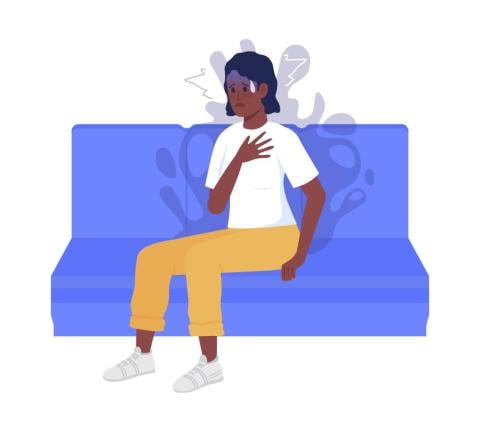
Panic attacks, particularly when you don’t know what they are or where they are coming from, can be…
OCD is comprised of two components – obsessions and compulsions. Obsessions are unwanted thoughts, images, and urges that cause an individual anxiety, disgust, and/or distress. In an effort to alleviate the discomfort, the person will engage in compulsions, which are physical or mental behaviors that may or may not be repetitive, as well as avoidance of triggers, all of which provide short-term relief but ultimately perpetuate the OCD cycle.
The level of insight a person has about their disorder ranges, with some recognizing that their obsessionals are illogical and have no direct relationship with their compulsions, while others struggle to detangle the two. This is more likely to occur the longer someone has suffered without treatment.
It’s important to understand that OCD is extremely creative and knows no bounds when invading a person’s life. Research indicates that a person’s individual themes are often directly linked with what they value most in life, which is why the obsessions are especially distressing to them.
Among the most common OCD themes are:
Keep in mind that people with these themes are not dangerous and there is no chance of them actually acting out these obsessions.
Although compulsions are in response to the distress caused by obsessions, there is not always direct logic connecting the two. In some cases, the compulsions “make sense,” such as excessive washing in response to contamination obsessions; however, others have no clear relationship, such as tapping a table four times to keep a loved one safe.
Among the most common compulsions are avoidance, checking/reviewing, reassurance-seeking, decontaminating, repeating, rewriting, confessing, trying to “figure it out,” thinking/saying a safe word/phrase, and ordering/arranging.
When people engage in compulsions there is no pleasure involved, but rather a reduction of distress. Individuals with OCD do not want to be doing compulsions, but their fears and anxiety about the consequences of not performing them are so great that the temporary relief offered feels worthy of the problems the compulsions cause.
Anhedonia can occur in individuals with OCD, particularly when obsessive thoughts and compulsive behaviors interfere with the ability to find pleasure in activities.
OCD can only be properly diagnosed by a licensed clinician, and preferably one who has experience and specializes in treating OCD. Because of how misunderstood the disorder is, it is often initially misdiagnosed, most commonly as an anxiety disorder, and sometimes as an eating disorder or psychotic disorders. As the evidence-based treatments for these disorders are different, an accurate diagnosis is crucial.
In the United States, diagnosing OCD is based on criteria set forth by the Diagnostic and Statistical Manual of Mental Disorders (DSM). Its current edition, the DSM 5-TR, sets forth three primary criteria for the diagnosis of OCD – obsessions, compulsions, and that they are time-consuming or cause clinically significant distress or impairment in various areas of functioning, including work, school, or social life.
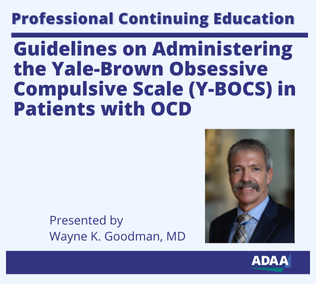
There are several assessments that assess the severity of OCD symptoms, including the Yale-Brown Obsessive-Compulsive Scale (Y-BOCS), the Children’s Yale-Brown Obsessive-Compulsive Scale (CY-BOCS), and the Dimensional Obsessive–Compulsive Scale (DOCS).
When seeking treatment for OCD, it’s crucial to ensure that the provider is utilizing evidence-based treatments for OCD. When a treatment is evidence-based, it means that science, along with other professionals, have confirmed that the therapy is beneficial for a specific issue. If a treatment is not evidence-based, the therapist is not utilizing best practices and patients are receiving treatment that at best is not helpful and at worst is harmful.
To learn more in-depth about Obsessive-Compulsive Disorder and treatments, check out ADAA's Patient Guide to Mood and Anxiety Disorders.


Take Action
Find Help. Learn More. Support ADAA.