

Your support changes lives. Thank you!
Learn More
Authored by: Jordyn Tovey, LMSW. Originally posted on The Conversation.
Punishing regimens of facial exercises. Intentional starvation. Reshaping the jawline or cheekbones by smashing them with a hammer or chisel.
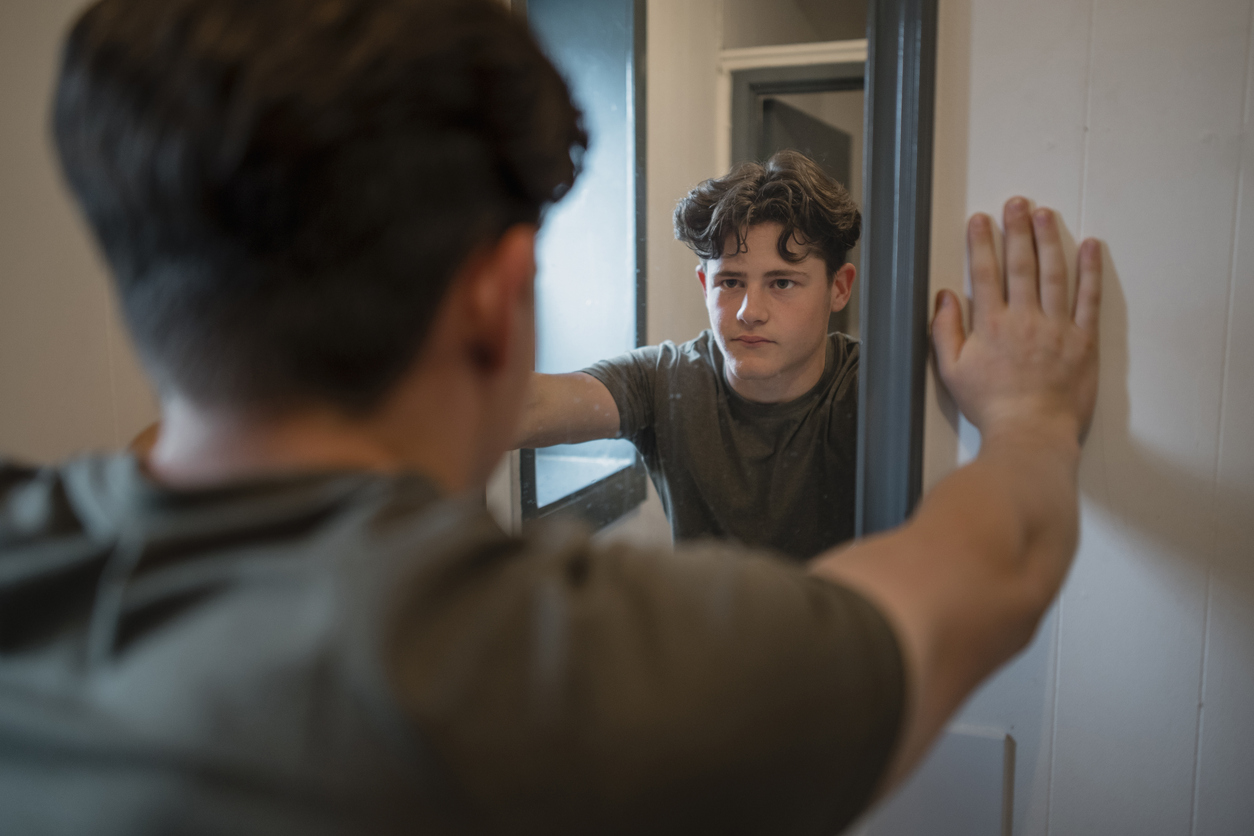
These are some of the more extreme behaviors in a practice called looksmaxxing – an effort to maximize one’s looks at all costs – that’s attracting an enormous following of largely teenage boys and young men on social media. Looksmaxxing has gone from niche to mainstream since trending on TikTok in the early 2020s.
Much of the media coverage of looksmaxxing has focused on cultural dimensions, such as the misogynist ideology underlying this trend and its implications for cultural conversations about masculinity. Meanwhile, looksmaxxers with an especially large following of hundreds of thousands of people on social media platforms like TikTok and Kick have attained pop-culture status.
But in the midst of this spectacle, the well-being of the young men participating in this trend has been largely overlooked.
From my perspective as a mental health professional studying how people think and talk about emotions and mental health, the behaviors associated with looksmaxxing look suspiciously like symptoms of eating disorders and body dysmorphia, also called body dysmorphic disorder.
These disorders are especially harmful to young people who are in the throes of figuring out who they are, what they want and how to navigate relationships – efforts already complicated by the pressures of social media.
In my view, platforming these young men and sensationalizing their behaviors, rather than recognizing those behaviors as signs of psychological distress, distracts from the urgent need to address these serious mental health concerns.
A Blast From the Past
The looksmaxxing trend repeats some troubling history.
A similar ideology emerged in the 2000s, but it was embraced and popularized primarily by young women and girls. Microblogging and social networking platforms like Tumblr and MySpace became hotbeds for advice on disordered eating.
Users developed communities where they could share tips and encourage eating disorder-related behavior – for example, restricting eating, inducing vomiting or hiding weight loss from loved ones. This content was tagged “pro-ana” (pro-anorexia), “pro-mia” (pro-bulimia), or “pro-ED” (pro-eating disorder).
Mainstream media, including “The Oprah Winfrey Show” in 2001, covered the phenomenon of pro-eating disorder internet communities with an air of grim concern. Exploring how online pro-eating disorder communities affected girls and young women quickly became an area of research for social scientists and medical professionals.
Still, it took until 2012 for Tumblr, an especially popular site for these communities, to implement a policy banning pro-eating disorder content and warn users about the dangers of eating disorders. This was part of a larger effort by the platform to curb self-harm-related blogging.
Now, in 2026, almost all social media platforms have regularly updated policies or “community guidelines” that aim to prevent such communities from forming and that instead direct users to helpful resources.
In addition to guidelines that prohibit explicit pro-eating disorder content, Instagram and TikTok have dedicated pages about getting help for eating disorders. Meta has a policy page detailing its rationale and practice around “suicide, self injury and eating disorders” – as does Pinterest, which also banned all weight loss ads in 2021 in an ongoing commitment to user safety.
Underpathologizing Young Men
Despite the widespread recognition that eating disorder-related content is harmful to mental and physical health, looksmaxxing has yet to be addressed by social media platform policies. Instead, prominent looksmaxxers are treated as internet celebrities and have been interviewed and profiled for their methods and worldview.
The language and positioning used for each scenario is likely one factor. “Pro-ED” refers directly to a mental health disorder. Recent research argues that looksmaxxing, by contrast, is positioned as goal-oriented and in that way can masquerade as self-improvement.
Still, what I personally consider the major difference between these movements is gender. Looksmaxxing is primarily aimed at young men, while “pro-ED” internet culture has centered around young women.
Researchers estimate that 1 in 3 people struggling with eating disorders are male. However, the traditional view that eating disorders are a girl’s and women’s illness lingers in both societal understanding and healthcare.
A hand holding a mobile phone on which a video has a young man smashing his face with a hammer.
A 2025 analysis of published studies underscored this discrepancy. It found that obsession with thinness is still widely considered the hallmark of an eating disorder, even though it only captures one type – primarily female – of the condition. Boys and men who struggle with eating disorders and body dysmorphia are far more likely to be fixated on leanness – meaning achieving an “ideal” or “perfect” ratio of muscle to fat.
Given that even clinical screenings do a poor job accounting for how this disorder appears in boys and young men, it’s no surprise that parents, teachers and the media also fall short in making this distinction.
A Clinical Take on Looksmaxxing
Seen through an accurate clinical lens, looksmaxxing behaviors clearly resemble potential symptoms of eating disorders and body dysmorphia. Beginning with an intense fixation on physical flaws, the practice encourages prioritizing appearance above all else.
This mindset often leads to actions to correct these perceived shortcomings. In a clinical setting, mental health experts call such actions compulsions – behaviors that feel impossible to resist – are fueled by obsessive thoughts and eventually begin to interfere with a person’s ability to lead a normal, healthy life.
For example, some actions like wearing makeup or putting lifts in shoes to appear taller aren’t bad in and of themselves, and can even be beneficial if they make people feel more confident. But not being able to leave the house or function without these corrective measures indicates a problem. Similarly, modifying diet or exercise to lose fat or gain muscle can be quite healthy, but abusing amphetamines to suppress appetite – a widespread practice in looksmaxxing – is dangerous and points to a mental health issue.
These behaviors deserve exploration because if left untreated, body dysmorphia and eating disorders can have lifelong implications. Early detection and intervention are key, as these disorders significantly raise the risk of physical and mental health issues, including heart problems, lasting skin changes, gastrointestinal complications, depression and suicide.
As with all mental health concerns, how society frames a problem shapes its response to it. Internet platforms’ and researchers’ responses to the internet culture surrounding eating disorders back in the 2010s set a valuable precedent. Using that precedent to respond to looksmaxxing not just as a cultural issue but as a clinical one could help researchers understand how eating disorders and body dysmorphia manifest differently in boys and young men.
It could also push social media companies to create appropriate guidelines around looksmaxxing content, help parents recognize warning signs and connect struggling boys and young men to the care they need and deserve.
If you or someone you know could benefit from talking to a specialist in male eating disorders or other mental health concerns, search the directory at the National Eating Disorders Association or the men’s mental health organization HeadsUpGuys.
If you or someone you know is in crisis and is based in the U.S., call the 988 Suicide & Crisis Lifeline to speak with a trained listener.





ADAA Blog Content and Blog Comments Policy
ADAA provides this Website blogs for the benefit of its members and the public. The content, view and opinions published in Blogs written by our personnel or contributors – or from links or posts on the Website from other sources - belong solely to their respective authors and do not necessarily reflect the views of ADAA, its members, management or employees. Any comments or opinions expressed are those of their respective contributors only. Please remember that the open and real-time nature of the comments posted to these venues makes it is impossible for ADAA to confirm the validity of any content posted, and though we reserve the right to review and edit or delete any such comment, we do not guarantee that we will monitor or review it. As such, we are not responsible for any messages posted or the consequences of following any advice offered within such posts. If you find any posts in these posts/comments to be offensive, inaccurate or objectionable, please contact us via email at [email protected] and reference the relevant content. If we determine that removal of a post or posts is necessary, we will make reasonable efforts to do so in a timely manner.
ADAA expressly disclaims responsibility for and liabilities resulting from, any information or communications from and between users of ADAA’s blog post commenting features. Users acknowledge and agree that they may be individually liable for anything they communicate using ADAA’s blogs, including but not limited to defamatory, discriminatory, false or unauthorized information. Users are cautioned that they are responsible for complying with the requirements of applicable copyright and trademark laws and regulations. By submitting a response, comment or content, you agree that such submission is non-confidential for all purposes. Any submission to this Website will be deemed and remain the property of ADAA.
The ADAA blogs are forums for individuals to share their opinions, experiences and thoughts related to mental illness. ADAA wants to ensure the integrity of this service and therefore, use of this service is limited to participants who agree to adhere to the following guidelines:
1. Refrain from transmitting any message, information, data, or text that is unlawful, threatening, abusive, harassing, defamatory, vulgar, obscene, that may be invasive of another 's privacy, hateful, or bashing communications - especially those aimed at gender, race, color, sexual orientation, national origin, religious views or disability.
Please note that there is a review process whereby all comments posted to blog posts and webinars are reviewed by ADAA staff to determine appropriateness before comments are posted. ADAA reserves the right to remove or edit a post containing offensive material as defined by ADAA.
ADAA reserves the right to remove or edit posts that contain explicit, obscene, offensive, or vulgar language. Similarly, posts that contain any graphic files will be removed immediately upon notice.
2. Refrain from posting or transmitting any unsolicited, promotional materials, "junk mail," "spam," "chain mail," "pyramid schemes" or any other form of solicitation. ADAA reserves the right to delete these posts immediately upon notice.
3. ADAA invites and encourages a healthy exchange of opinions. If you disagree with a participant 's post or opinion and wish to challenge it, do so with respect. The real objective of the ADAA blog post commenting function is to promote discussion and understanding, not to convince others that your opinion is "right." Name calling, insults, and personal attacks are not appropriate and will not be tolerated. ADAA will remove these posts immediately upon notice.
4. ADAA promotes privacy and encourages participants to keep personal information such as address and telephone number from being posted. Similarly, do not ask for personal information from other participants. Any comments that ask for telephone, address, e-mail, surveys and research studies will not be approved for posting.
5. Participants should be aware that the opinions, beliefs and statements on blog posts do not necessarily represent the opinions and beliefs of ADAA. Participants also agree that ADAA is not to be held liable for any loss or injury caused, in whole or in part, by sponsorship of blog post commenting. Participants also agree that ADAA reserves the right to report any suspicions of harm to self or others as evidenced by participant posts.