


Your support changes lives. Thank you!
Learn More
Discover a structured framework for assessing patients’ AI chatbot use, including its frequency,…
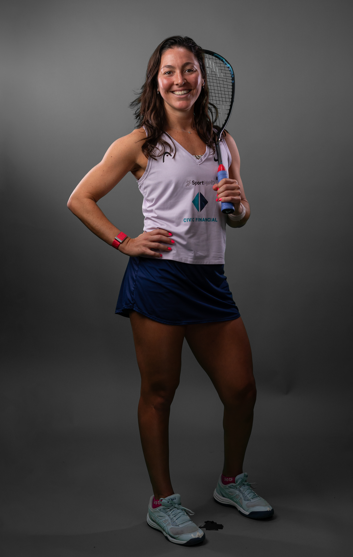
USA squash player, Amanda Sobhy, shares her experience as a high-achieving athlete battling an eating disorder intertwined with anxiety and depression. Sobhy explains how cycles of control, perfectionism, and identity in sport fueled her struggles, and how mindfulness, self-awareness, and healthier coping tools became essential in breaking the cycle and moving toward healing.
This story is shared in collaboration with the National Eating Disorders Association (NEDA).
For the better part of a decade, I struggled with an eating disorder that I hid in plain sight. I was a high-performing, high-achieving athlete who, on the surface, looked like I had it all together—but underneath, I was drowning. What I didn’t realize at the time was that my eating disorder wasn’t existing on its own. It was intertwined with other mental health challenges, especially anxiety and depression.
When we think about mental health, we often picture a single, isolated diagnosis. But in reality, many of these struggles coexist. You know the expression: what came first, the chicken or the egg? That’s exactly how it felt with my eating disorder and anxiety. Was it my eating disorder that caused my anxiety, or was anxiety the root issue, with my eating disorder behaviors acting as a coping mechanism?
For me, they were deeply intertwined and showed up in two main ways. Sometimes, my anxiety came first, and my eating disorder behaviors became a way to cope or regain control. Other times, my eating disorder itself was the source of my anxiety.
The years I struggled most with my eating disorder were also the years my anxiety was at its worst. I didn’t have the tools to manage my emotions in a healthy way. So when I felt triggered or overwhelmed, I turned to what I knew—binging and purging—as a way to cope.
My triggers were often tied to a lack of control: the unknown, stress, moving, burnout, exhaustion from training, injury, or even just being sleep-deprived. On top of that, my perfectionist, all-or-nothing mindset amplified everything. As a high-level athlete, I carried an intense fear of failure—of letting people down, of losing matches, of not being good enough.
My identity was completely wrapped up in my sport as a professional squash player. So, when things didn’t go the way I wanted, I didn’t know how to process those emotions. Instead, I coped the only way I knew how—through binging and purging, especially after losses.
But it also worked the other way around. My eating disorder fueled my anxiety just as much.
I felt extreme anxiety anytime I deviated from my “safe” diet—eating certain foods, going out to restaurants, attending social events, or even feeling like I had eaten “too much.” Traveling for tournaments added another layer of stress, especially when I didn’t have access to the foods I felt comfortable eating.
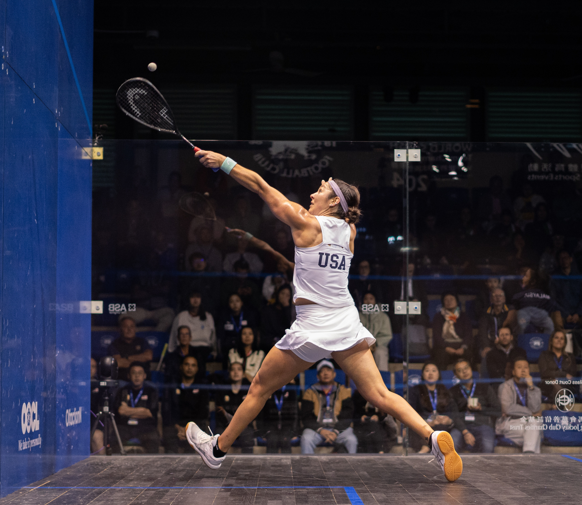
I became hyper-aware of my body. If my squash outfits felt tighter on match days, I would spiral. Late matches made me anxious because it meant eating throughout the day and feeling uncomfortable in my body. I was constantly body-checking in the mirror, afraid of not being fit enough, of feeling heavy or slow on court.
During tournaments, I relied on strict routines, eating the exact same meals on match days. If that routine was disrupted in any way, my anxiety would skyrocket.
And then there was the aftermath of a binge and purge. I would feel completely out of control during a binge, briefly convince myself I was regaining control through purging, and then be hit with an overwhelming wave of anxiety, shame, guilt, disgust, isolation, and depression.
It was a toxic, exhausting cycle—one that slowly deteriorated my mental health and quality of life.
What ultimately helped me begin to break free from that cycle was learning how to manage my emotions in healthier ways and addressing my anxiety at its root.
I learned how to pause. To come back to the present moment. To create space between my thoughts and my actions.
Those small shifts made a big difference.
Even in moments when I did fall back into old patterns, I began to respond differently. After a binge and purge, instead of spiraling further, I practiced acceptance. I acknowledged what happened without judgment, grounded myself in the present, and repeated a simple mantra:
“It’s a new day. I’ll be okay.”
I couldn’t change what had already happened. But I could choose, in that moment, to take a step toward a healthier future.
Sharing my story with the Anxiety and Depression Association of America (ADAA) felt deeply personal to me, because anxiety and depression were never separate from my eating disorder—they were woven into it. For so long, I felt alone in that experience, unsure if anyone would truly understand the complexity of it all.
If my story helps even one person feel less alone, more understood, or more willing to reach out for support, then sharing it here has been worth it.
This story is shared in collaboration with the National Eating Disorders Association (NEDA).
Amanda Sobhy Bio:
Amanda Sobhy is the most accomplished squash player in American history. She is the first American to break into the top five in world rankings, Sobhy reached a career-high and American record of #3 in the world before suffering one of two torn achilles over the course of her trailblazing career. Currently ranked #2 in the U.S. and #11 in the world on the Professional Squash Association (PSA) Tour after coming back from her second achilles rupture in December 2023, Sobhy is a six-time U.S. National Champion, two-time Pan American Games triple gold medalist (2015 & 2019), holds 23 PSA Titles, and helped guide Team USA to its first-ever World Team Championships final and silver medal in 2022 and 2024.
Regarded as the greatest college squash player of all time, Amanda studied at Harvard University where she compiled a historic undefeated record of 62-0 at the number one spot having only lost 2 games her entire college career. She helped lead the Crimson to three College Squash Association (CSA) Team National Championships and became only the second squash player to win four Individual National Titles. She is a four-time All-American and four-time Ivy League Player of the Year.
Throughout her success, she quietly battled challenges with pressures and perfectionism on and off the court that directly impacted her mental health including an eating disorder, anxiety, and depression. Courageously, Sobhy has shared her personal struggles and experiences with bulimia to help inspire and encourage help-seeking behavior for others who may be facing similar challenges in life. She has recently returned to court in 2024 following her second achilles injury with her sights set on the LA28 Summer Games where the sport of squash will be making its Olympic debut.
Sobhy also serves on the board of the Professional Squash Association, Squash & Education Alliance, and is an ambassador for the recently launched USSquash Foundation.


Take Action
Find Help. Learn More. Support ADAA.