Your support changes lives. Thank you!
Learn More
Discover a structured framework for assessing patients’ AI chatbot use, including its frequency,…
Blog
Authored by: Eda Gordbis, PhD, LMFT, and Bradley Bohall, BS
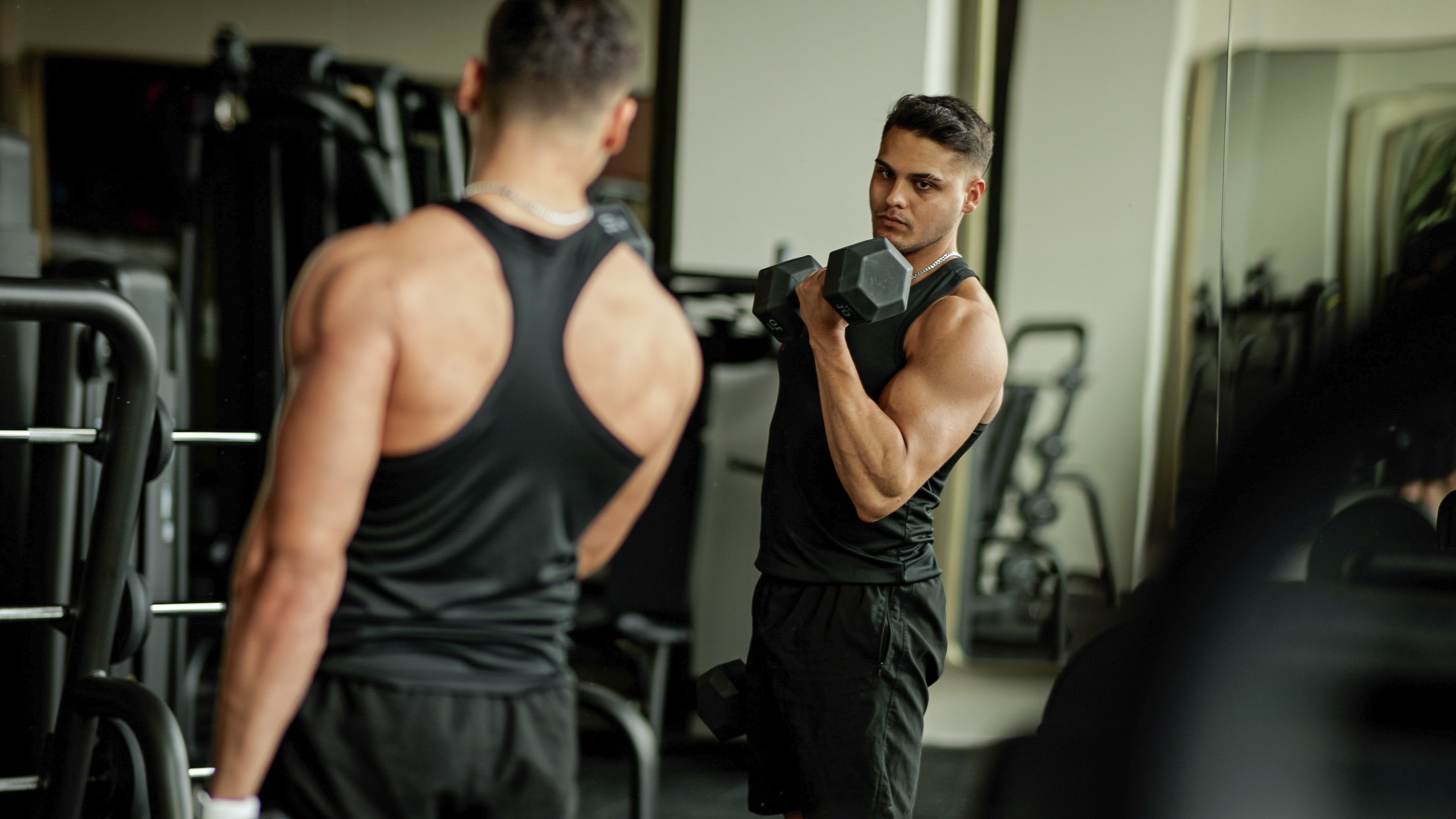
But for some men, the pursuit of fitness slowly becomes something else. Exercise stops feeling like a choice and starts feeling like a requirement. Missing one workout can lead to guilt or panic. Looking in the mirror becomes a repeated test that is never passed. A body that is already healthy, strong, or muscular may still feel too small, too soft, or not “masculine” enough.
This is where fitness can become fear.
Muscle dysmorphia is a form of body dysmorphic disorder (BDD) in which a person becomes preoccupied with the belief that their body is too small, insufficiently muscular, or not lean enough. Although others may see the person as fit or muscular, the individual may feel inadequate, weak, or ashamed of their appearance. Muscle dysmorphia is often discussed in the context of fitness or gym culture, but it can affect people in many settings, including school, work, dating, relationships, and everyday social situations.
This can be especially difficult to recognize in men because many of the behaviors associated with muscle dysmorphia can look socially acceptable, or even admirable, from the outside. Spending hours at the gym, following a strict diet, tracking nutrition, avoiding certain foods, or constantly trying to “bulk” or “cut” may be praised as dedication. However, the underlying motivation matters.
Healthy fitness is usually flexible. It can adapt to a person’s life, relationships, school, work, and physical health. Muscle dysmorphia is more rigid. The person may feel driven by anxiety, shame, or the fear of not being big enough. The gym may no longer be a place of enjoyment or health, but a way to temporarily quiet distress.
Young men today are exposed to an endless stream of idealized male bodies. In the past, these images were mostly limited to movies, magazines, or advertisements. Now, they are available all day through social media, fitness influencers, transformation videos, and supplement/exercise clothing ads.
This matters because many of these bodies are presented without context. A young man scrolling through his phone may see influencers or actors with extremely muscular and lean physiques and assume those bodies are realistic, common, and achievable through discipline alone. What is often left out are the factors behind the image: genetics, years of training, professional coaching, strict dieting, lighting, editing, posing, temporary dehydration, and, in some cases, performance-enhancing substances.
Superhero movies and fitness influencer culture can intensify this pressure. These physiques may be entertaining on screen, but they can also create distorted expectations for real life. When young men repeatedly compare themselves to bodies produced under extraordinary conditions, their own healthy bodies may begin to look inadequate.
This does not mean social media causes BDD by itself. BDD is a serious mental health condition with complex psychological, biological, and social factors. But social media and gym culture can worsen body dissatisfaction, increase comparison, and reinforce the belief that a man’s worth is tied to being bigger, leaner, or more muscular.
It is not always easy to tell the difference between commitment to fitness and a developing body image problem. Some warning signs may include:
One of the most painful parts of muscle dysmorphia is that the goal keeps moving. A person may gain muscle, become leaner, or receive compliments, but the relief does not last. The mind quickly finds another flaw, another comparison, or another reason the body is still not good enough.
Many men feel embarrassed to admit they are struggling with body image. They may worry that others will see them as vain, weak, or superficial. Some may not recognize the problem as anxiety or BDD because their behaviors are reinforced by the culture around them. Friends may praise their discipline. Social media may reward their appearance. Gym culture may normalize constant comparison.
This can make it harder for men to ask for help. Instead of saying, “I am anxious about my body,” they may say, “I just need to get bigger,” “I need to be more disciplined,” or “I will feel better once I reach my goal.”
But when distress remains no matter how much the body changes, the problem may not be the body itself. The problem may be the anxiety, shame, and distorted self-perception attached to it.
The goal of treatment is not to make someone stop caring about fitness or health. Rather, the goal is to help the person build a healthier, more flexible relationship with their body.
Cognitive behavioral therapy (CBT), including exposure-based approaches, can help people with BDD gradually reduce compulsive behaviors such as mirror checking, reassurance-seeking, avoidance, and constant comparison. Treatment may also focus on shame, perfectionism, rigid beliefs about appearance, and the fear of being judged by others. Medication, particularly serotonin reuptake inhibitors, can also be helpful for many people suffering from body dysmorphic disorder.
Loved ones can help by responding with compassion while avoiding repeated reassurance about appearance, which may reduce anxiety briefly but often strengthens the cycle over time. Because many people with BDD may not see the purpose of mental health treatment at first, family members can encourage help by focusing on how a professional can support them in managing the distress that interferes with school, work, dating, relationships, and the life they want to live.
Fitness can be a meaningful part of life. It can support mental health, physical health, confidence, and community. But fitness should not create a cycle of unattainable goals.
Young men deserve to know that many of the bodies they see online and on screen are not fair standards for everyday life. They also deserve to know that if the pursuit of getting bigger, leaner, or more muscular has become a source of anxiety, shame, or isolation, help is available.
The goal is not to give up strength. The goal is to build a life where strength is not measured only by appearance, and where a person’s worth is not determined by the size or composition of their body.




Take Action
Find Help. Learn More. Support ADAA.








ADAA Blog Content and Blog Comments Policy
ADAA provides this Website blogs for the benefit of its members and the public. The content, view and opinions published in Blogs written by our personnel or contributors – or from links or posts on the Website from other sources - belong solely to their respective authors and do not necessarily reflect the views of ADAA, its members, management or employees. Any comments or opinions expressed are those of their respective contributors only. Please remember that the open and real-time nature of the comments posted to these venues makes it is impossible for ADAA to confirm the validity of any content posted, and though we reserve the right to review and edit or delete any such comment, we do not guarantee that we will monitor or review it. As such, we are not responsible for any messages posted or the consequences of following any advice offered within such posts. If you find any posts in these posts/comments to be offensive, inaccurate or objectionable, please contact us via email at [email protected] and reference the relevant content. If we determine that removal of a post or posts is necessary, we will make reasonable efforts to do so in a timely manner.
ADAA expressly disclaims responsibility for and liabilities resulting from, any information or communications from and between users of ADAA’s blog post commenting features. Users acknowledge and agree that they may be individually liable for anything they communicate using ADAA’s blogs, including but not limited to defamatory, discriminatory, false or unauthorized information. Users are cautioned that they are responsible for complying with the requirements of applicable copyright and trademark laws and regulations. By submitting a response, comment or content, you agree that such submission is non-confidential for all purposes. Any submission to this Website will be deemed and remain the property of ADAA.
The ADAA blogs are forums for individuals to share their opinions, experiences and thoughts related to mental illness. ADAA wants to ensure the integrity of this service and therefore, use of this service is limited to participants who agree to adhere to the following guidelines:
1. Refrain from transmitting any message, information, data, or text that is unlawful, threatening, abusive, harassing, defamatory, vulgar, obscene, that may be invasive of another 's privacy, hateful, or bashing communications - especially those aimed at gender, race, color, sexual orientation, national origin, religious views or disability.
Please note that there is a review process whereby all comments posted to blog posts and webinars are reviewed by ADAA staff to determine appropriateness before comments are posted. ADAA reserves the right to remove or edit a post containing offensive material as defined by ADAA.
ADAA reserves the right to remove or edit posts that contain explicit, obscene, offensive, or vulgar language. Similarly, posts that contain any graphic files will be removed immediately upon notice.
2. Refrain from posting or transmitting any unsolicited, promotional materials, "junk mail," "spam," "chain mail," "pyramid schemes" or any other form of solicitation. ADAA reserves the right to delete these posts immediately upon notice.
3. ADAA invites and encourages a healthy exchange of opinions. If you disagree with a participant 's post or opinion and wish to challenge it, do so with respect. The real objective of the ADAA blog post commenting function is to promote discussion and understanding, not to convince others that your opinion is "right." Name calling, insults, and personal attacks are not appropriate and will not be tolerated. ADAA will remove these posts immediately upon notice.
4. ADAA promotes privacy and encourages participants to keep personal information such as address and telephone number from being posted. Similarly, do not ask for personal information from other participants. Any comments that ask for telephone, address, e-mail, surveys and research studies will not be approved for posting.
5. Participants should be aware that the opinions, beliefs and statements on blog posts do not necessarily represent the opinions and beliefs of ADAA. Participants also agree that ADAA is not to be held liable for any loss or injury caused, in whole or in part, by sponsorship of blog post commenting. Participants also agree that ADAA reserves the right to report any suspicions of harm to self or others as evidenced by participant posts.