Your support changes lives. Thank you!
Learn More
06.12.2026
I was very close to my mom. I was a happy little girl because she poured so much love and care into my life. Every year, she would make me a birthday cake. It was a simple thing, but it made me feel so special. And that was my life until my mom passed away in 2004. I was eight years old and had no idea what was happening. I didn't understand that death meant I would have to live the rest of my life without my mom by my side.
As I grew older, I tried my best to be okay. But deep down, I was always carrying feelings I couldn't fully understand. I felt lost. Empty. I never really talked to anyone about it. Instead, I wrote in my journal or wrote letters to my mom, as if she could read them and somehow write back.
For years, I made sure I looked fine in front of everyone, my friends, my family, everyone around me. I acted as if nothing had happened. It wasn't until 2018 that I began to feel that something was seriously wrong. I withdrew from the world. I stopped talking to people. I cried for no clear reason. When I was alone in my room, I would throw things, punch the wall, or scream into my pillow. I felt incredibly alone, and eventually, I started hurting myself.
I decided to seek professional help, and that was when I was diagnosed with Borderline Personality Disorder (BPD). At that time, mental health was still not something people in my country talked about openly. There was a huge stigma surrounding it. If you opened up about your struggles, people might assume you were "crazy" or simply not close enough to God, so I told no one. Not my friends. Not my family. At least, not at that time.
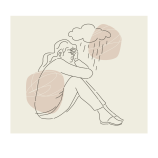
I remember my psychiatrist encouraging me to learn more about BPD so I could understand myself better. For me, living with BPD feels like being on a rollercoaster of emotions. I can feel like the sun shining brightly in the morning, only to find myself under dark clouds a few hours later. The shifts can be sudden, confusing, and overwhelming.
I also struggle with a constant fear of abandonment. I can love people deeply, yet push them away when things start to feel too heavy to carry.
When I feel nothing, I feel it completely.
When I feel everything, I feel it completely, too.
My BPD has made it difficult to maintain stable relationships, not only with other people, but also with myself. There is an ongoing battle inside my head, a voice that constantly tells me things I know I shouldn't believe: that I am too much, that I am a burden, that I will never get better, that I am too sensitive and too difficult to love. When things go wrong, I always look for the fault lines within myself.
It has affected my work as well. There were days when I couldn't even get out of bed because everything felt overwhelming. At times, I felt detached from my own body, making it difficult to function in my day-to-day life. The pain felt unbearable, and all I wanted was for the pain to stop, or for me to simply disappear.
Despite everything, deciding to seek professional help was one of the best decisions I have ever made. I have been going to therapy for around eight years now and have been taking medication since 2022. Therapy and medication have helped me tremendously.
My psychologist and my psychiatrist understood how to work with me. They helped me make peace with myself and taught me how to treat myself with more compassion. I’ve also learned how to cope and how to regulate my emotions.
One day, my psychologist told me, "Hang in there, just a little bit longer. This, too, shall pass."
That sentence became a mantra for me.
Over time, I also started opening up to the people around me about my condition. It wasn't easy. Being this vulnerable about my life never is, but I believe people need to understand what it feels like to struggle with mental health issues. People like me have stories worth telling and voices worth hearing.
The more we talk about mental health, the more understanding we can create. And the more understanding we create, the more likely people are to seek help when they need it.
Today, I carry a little more hope. Hope that I can continue to get better. Hope that despite living with BPD, I can survive, and even thrive.
I chose to submit my story because I know what it feels like to struggle in silence. I specifically wanted to share my story with ADAA is that ADAA provides a space for people living with mental health conditions to share their experiences and connect with others. Reading the personal stories featured on the ADAA website has made me feel less alone in my own journey. Knowing how meaningful those stories have been to me, I hope that by sharing my own experience, someone else may feel understood, supported, and a little less alone as well.
For many years, I kept my grief, my diagnosis, and my struggles with mental health to myself. I was afraid of being judged, misunderstood, or seen differently. At the time, mental health was not something people openly talked about, and the stigma surrounding it made it even harder to ask for help.
By sharing my story, I hope others who are going through similar experiences can feel less alone. I also hope it helps people better understand what it is like to live with BPD and other mental health challenges. Sometimes, all it takes is one story to make someone feel seen, understood, or encouraged to seek help.
If my story can help even one person feel a little less alone, then sharing it is worth it.


Take Action
Find Help. Learn More. Support ADAA.