
Your support changes lives. Thank you!
Learn More
Discover a structured framework for assessing patients’ AI chatbot use, including its frequency,…

Authored by: Abubaker Sekatuka
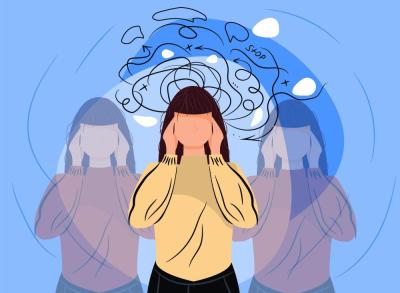
I’ve been quiet lately. Not because I had nothing to say, but because the pain I’ve felt has been hard to put into words.
Over the past few weeks, I’ve sat with young people who are really hurting. Their stories weren’t just told—they were whispered with fear. You could feel how heavy their hearts were.
One young person told me:
“I think someone put a curse on me… That’s why nothing ever works out for me.”
And then… silence. A long, heavy silence.
How do you tell a 19-year-old who just lost a parent and failed an exam that their pain is not a curse?
How do you help a girl believe in her dreams when she thinks she was born with bad luck?
In many parts of Uganda and Africa, people don’t learn about mental health. So when something hurts inside, they often say it’s caused by witchcraft, a curse, or someone wishing them harm.
Many young people don’t know that trauma has signs, like:
These are not caused by magic. They are the result of real-life problems—like loss, abuse, poverty, and being let down by people or systems that were supposed to help.
But if no one teaches them that, they believe what they’ve heard growing up—that someone cursed them. That bad things happen because of jealous family members. That they are doomed.
It’s the only explanation they’ve ever had.
The problem with believing you are cursed is that it takes away your power.
It makes a girl think she’ll never succeed no matter how hard she works. It tells a boy that he was doomed the moment his father died.
These aren’t just scary thoughts. They are signs of untreated pain, passed down through generations.
Two weeks ago, I sat with a 17-year-old boy. His father had died. His mother was very sick. He had to leave school. He whispered:
“I think my aunt bewitched me.”
But I didn’t hear superstition.
I heard grief.
I saw a boy crushed by sadness, trying to find a reason for all the pain.
You can’t teach a young person new skills if they believe they’re cursed.
You can’t help someone build a better life if they think their future is ruined.
If we want to help young people, we must start with healing.
We need:
In Uganda, groups like Sharing Circles are already doing this. They offer group therapy to young people who are struggling. But we need more.
Imagine telling a boy who thinks he’s cursed:
“You’re not cursed. You’re sad. And you need support.”
Imagine telling a girl who feels broken:
“This is not a punishment. It’s a health issue. And there is help.”
That’s not just kindness. That’s change.
Our job—whether we are teachers, parents, helpers, or just people who care—is to help young people learn new ways to see their pain.
As African thinker Kwame Gyekye once said, our old beliefs aren’t “crazy”—they are based on what people knew at the time.
Now, we must tell our youth:
Because if we don’t help change the story, the pain will just keep going.
Have you ever felt like the world is against you?
What if you could be the one to say to someone, “You are free”?
If you’re reading this, please:
Because healing is not just personal.
It is important.
It is urgent.
And it starts with us.

Take Action
Find Help. Learn More. Support ADAA.





ADAA Blog Content and Blog Comments Policy
ADAA provides this Website blogs for the benefit of its members and the public. The content, view and opinions published in Blogs written by our personnel or contributors – or from links or posts on the Website from other sources - belong solely to their respective authors and do not necessarily reflect the views of ADAA, its members, management or employees. Any comments or opinions expressed are those of their respective contributors only. Please remember that the open and real-time nature of the comments posted to these venues makes it is impossible for ADAA to confirm the validity of any content posted, and though we reserve the right to review and edit or delete any such comment, we do not guarantee that we will monitor or review it. As such, we are not responsible for any messages posted or the consequences of following any advice offered within such posts. If you find any posts in these posts/comments to be offensive, inaccurate or objectionable, please contact us via email at [email protected] and reference the relevant content. If we determine that removal of a post or posts is necessary, we will make reasonable efforts to do so in a timely manner.
ADAA expressly disclaims responsibility for and liabilities resulting from, any information or communications from and between users of ADAA’s blog post commenting features. Users acknowledge and agree that they may be individually liable for anything they communicate using ADAA’s blogs, including but not limited to defamatory, discriminatory, false or unauthorized information. Users are cautioned that they are responsible for complying with the requirements of applicable copyright and trademark laws and regulations. By submitting a response, comment or content, you agree that such submission is non-confidential for all purposes. Any submission to this Website will be deemed and remain the property of ADAA.
The ADAA blogs are forums for individuals to share their opinions, experiences and thoughts related to mental illness. ADAA wants to ensure the integrity of this service and therefore, use of this service is limited to participants who agree to adhere to the following guidelines:
1. Refrain from transmitting any message, information, data, or text that is unlawful, threatening, abusive, harassing, defamatory, vulgar, obscene, that may be invasive of another 's privacy, hateful, or bashing communications - especially those aimed at gender, race, color, sexual orientation, national origin, religious views or disability.
Please note that there is a review process whereby all comments posted to blog posts and webinars are reviewed by ADAA staff to determine appropriateness before comments are posted. ADAA reserves the right to remove or edit a post containing offensive material as defined by ADAA.
ADAA reserves the right to remove or edit posts that contain explicit, obscene, offensive, or vulgar language. Similarly, posts that contain any graphic files will be removed immediately upon notice.
2. Refrain from posting or transmitting any unsolicited, promotional materials, "junk mail," "spam," "chain mail," "pyramid schemes" or any other form of solicitation. ADAA reserves the right to delete these posts immediately upon notice.
3. ADAA invites and encourages a healthy exchange of opinions. If you disagree with a participant 's post or opinion and wish to challenge it, do so with respect. The real objective of the ADAA blog post commenting function is to promote discussion and understanding, not to convince others that your opinion is "right." Name calling, insults, and personal attacks are not appropriate and will not be tolerated. ADAA will remove these posts immediately upon notice.
4. ADAA promotes privacy and encourages participants to keep personal information such as address and telephone number from being posted. Similarly, do not ask for personal information from other participants. Any comments that ask for telephone, address, e-mail, surveys and research studies will not be approved for posting.
5. Participants should be aware that the opinions, beliefs and statements on blog posts do not necessarily represent the opinions and beliefs of ADAA. Participants also agree that ADAA is not to be held liable for any loss or injury caused, in whole or in part, by sponsorship of blog post commenting. Participants also agree that ADAA reserves the right to report any suspicions of harm to self or others as evidenced by participant posts.