
Your support changes lives. Thank you!
Learn More
Discover a structured framework for assessing patients’ AI chatbot use, including its frequency,…
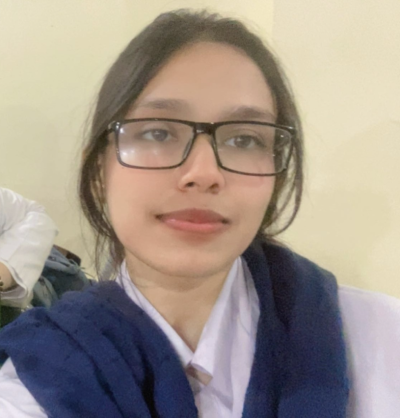
As a Radiology Technician and a stroke survivor, my professional journey has been deeply shaped by my personal experiences. In clinical education, we often focus on technical proficiency, but we rarely discuss the structural and social barriers faced by healthcare professionals with disabilities. This reflection is not a piece of research, but a call to re-evaluate our approach to inclusion in medical training.
When I was just 6 years old, in Class 1, my life changed in a heartbeat. After a day filled with school, tuition, and Quran class, I felt a sharp pain in my head at night. A few hours later, my little brother, excited about the snacks our father had brought home, tried to wake me up by shaking me. I didn’t wake up. When I finally did, I didn’t understand anything. Soon after, I started crying and vomiting, and my parents saw my right hand and leg twisting abnormally. They were terrified, fearing it might be something paranormal.
The Hospital Journey
The next morning, I had lost the ability to stand, walk, and talk. My father carried me everywhere. My journey began with a traumatic hospital experience where even senior neurosurgeons were baffled by a child having a stroke. After 3 to 4 days of tests, including CT scans and MRIs, they finally confirmed it was a stroke. I was paralyzed for over a month. With the help of Allah, I spoke for the first time on the 5th day. My family stood by me throughout this, and with regular physiotherapy, I regained the ability to walk after one month.
The Foundations of My Journey
Medical reports show the structural changes in my brain from that event. My treatment is still ongoing; I am currently on “on-and-off” medication, and I continue to go through physiotherapy because my right side is still physically weak. But I don’t see this as a problem. I see it as a map of everything I have overcome in the last 14 years.
The Struggle for Confidence
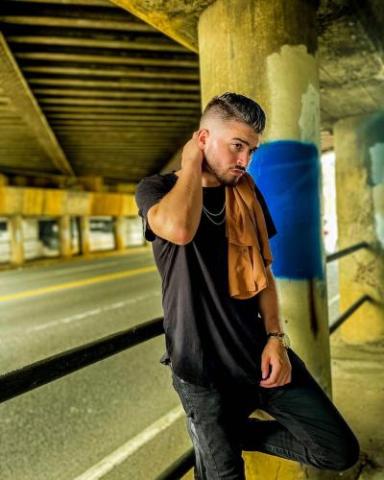
After the stroke, I took admission in school and had to learn to write with my left hand. I often felt different from other kids, and that feeling made me very under-confident. To avoid being noticed or facing judgmental stares, I would often hide my hand under my scarf, trying to blend in so I wouldn’t be seen.
During my school years, I faced the painful reality of bullying. Boys would point at my hand or laugh at how I walked, and peers used harsh, demeaning labels to make me feel small. I have realized that the barriers I faced were not just physical – they were systemic, societal, and deeply rooted in our educational culture.
The Unseen Battle: Depression and Emotional Fragility
Beyond the physical limitations and the bullying, the stroke left an invisible, heavy scar on my mental health. Navigating life as a young child after such a massive trauma was completely overwhelming. I found myself trapped in severe depression and intense emotional fragility. I became hyper-sensitive; the smallest complications, minor triggers, or everyday stressors would completely devastate me. I would burst into tears over the littlest things, unable to control the wave of emotions rushing through me.
Especially in the 9th grade, I felt like I didn’t fit in anywhere. I often cried when people asked about my story because I completely lacked the courage to revisit that harsh time. Deep down, I was constantly battling deep sadness and feelings of helplessness, wondering why this had happened to me.
Teachers and peers often viewed my physical limitations as a lack of capability, which only deepened my emotional distress and isolated me further. This taught me a harsh lesson: our society equates physical symmetry with intellectual or professional worth. It was only when I moved to a new school, where a kind mentor encouraged me to speak up and ask questions, that I finally began to reclaim my voice and build the confidence to pull myself out of that dark emotional space.
Finding Strength in Books and Creativity
I have an FSc degree in Medical Imaging Technology. During college, I found a different kind of strength. I loved reading books like The Metamorphosis by Franz Kafka and White Nights by Fyodor Dostoevsky. These stories helped me understand my own journey and find meaning in the struggles of life. Alongside my love for reading, I channeled my energy into photography, videography, and graphic design, proving my capability through my own creative work.
Mastery Through Adaptation
As I prepare to start my next internship to learn more advanced imaging modalities, I carry the lessons I’ve already learned. As I entered the field of radiology, I encountered the same rigid mindset. In the past, some people told me to change my field, claiming that because I have to adapt my work, I wouldn’t be able to handle tasks like blood pressure monitoring or injections.
I chose to ignore those doubts and focus on what I could do. Through hard work, I learned to operate X-ray machines with one hand. During my previous clinical experience, I proved that I could excel in patient positioning and computer tasks. Because I have been a patient on that table myself, I understand the human side of medical care better than anyone. I bring a level of care to my work that a textbook cannot teach.
The Bias of Educators: Many mentors prioritize “how” a task is done over “what” the final outcome is. My experience in X-ray and CT departments proves that clinical precision is about focus, patient empathy, and knowledge.
Societal Stigma: The bullying and emotional isolation I faced in school was a reflection of a society that views disability as a “weakness” rather than a different path to success.
Looking Ahead
I am currently a Radiology Technician, and I am preparing to start my BS degree this January. I am not sharing my story to seek sympathy; I am sharing it to highlight that teachers and supervisors must be trained to support, not discourage, and motivate students or professionals who face physical and emotional challenges. After completing my degree, I will officially be a Radiologic Technologist.
I believe the medical field must be more open to everyone. I want to show that our past doesn’t define our future. I am a stroke survivor, I am a mental health warrior, I am still fighting, and I am building my career in medical imaging.
I am a survivor, a learner, and an aspiring Radiologic Technologist, and I am committed to changing a system that discriminates, until it becomes accessible and inclusive for all.
What I’ve learned is that healing isn’t linear, but consistency, faith, and hope matter. And I hope that my story can bring comfort to others who feel alone in their struggle.
Take Action
Find Help. Learn More. Support ADAA.