
Your support changes lives. Thank you!
Learn More
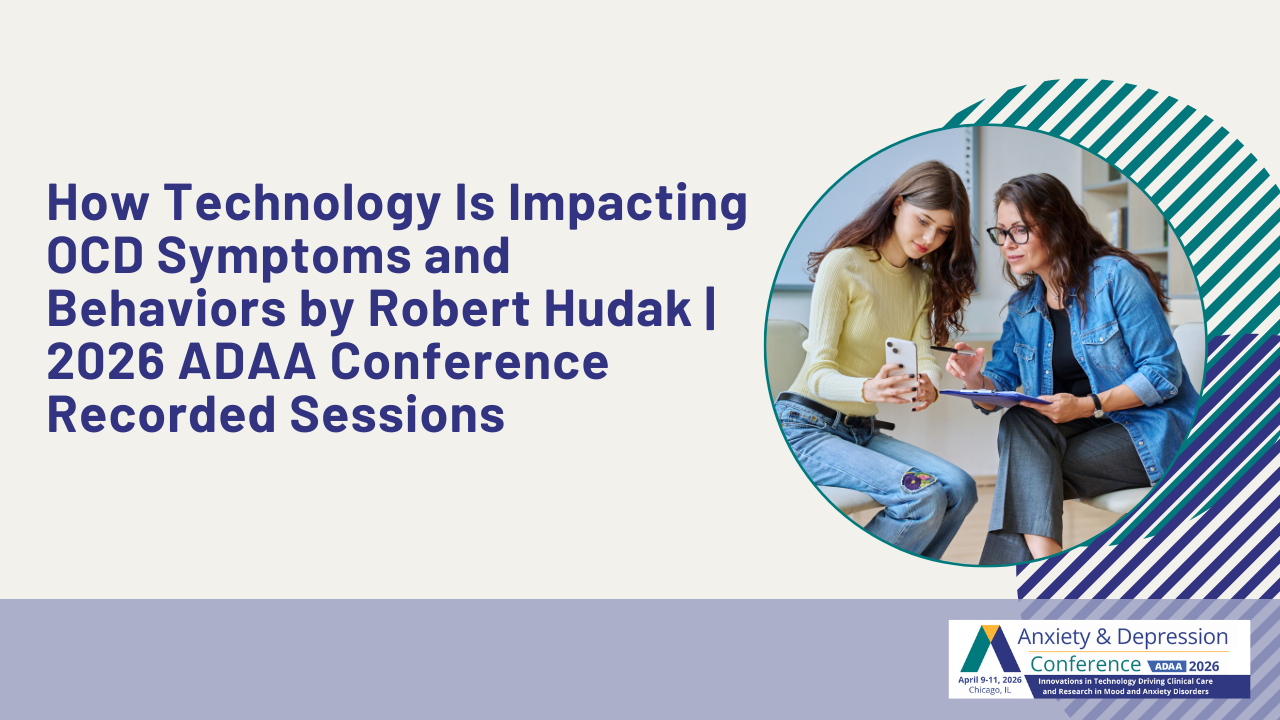
In this ADAA conference presentation, Dr. Robert Hudak, Jon Hershfield, Amy Mandelberg, and Rebecca Berman explored emerging forms of technology-related obsessions and compulsions in the digital age.
As technology becomes increasingly integrated into daily life, it is also shaping how obsessive-compulsive disorder (OCD) symptoms appear and are maintained.
The discussion examined topics including social media reassurance-seeking, digital hoarding, online checking rituals, false-memory concerns related to internet activity, cybercrime fears, AI-related reassurance-seeking, and technology-driven health and body monitoring behaviors. Through clinical examples and practical treatment considerations, the presenters highlighted how traditional OCD mechanisms can manifest in modern digital environments and how evidence-based approaches such as Exposure and Response Prevention (ERP) can be adapted to address them.
Recorded by Vumedi in partnership with ADAA.
https://www.vumedi.com/
ADAA Annual Conference: https://adaa.org/conference




ADAA Continuing Education Credits for Live and On-Demand Programming
Learners complete an evaluation form to receive a certificate of completion. You must participate in the entire activity as partial credit is not available. If you are seeking continuing education credit for a specialty not listed below, it is your responsibility to contact your licensing/certification board to determine course eligibility for your licensing/certification requirement.
Some ADAA professional webinars focused on diversity or cultural competency subject matter are eligible for the Cross-Culture Competency Diversity Credit. If a webinar is eligible for this credit, it will be reflected on your credit certificate.
All continuing education credits are provided through Amedco, LLC. Learn more about the CE/CME accreditation information here.