Your support changes lives. Thank you!
Learn More
recorded webinar
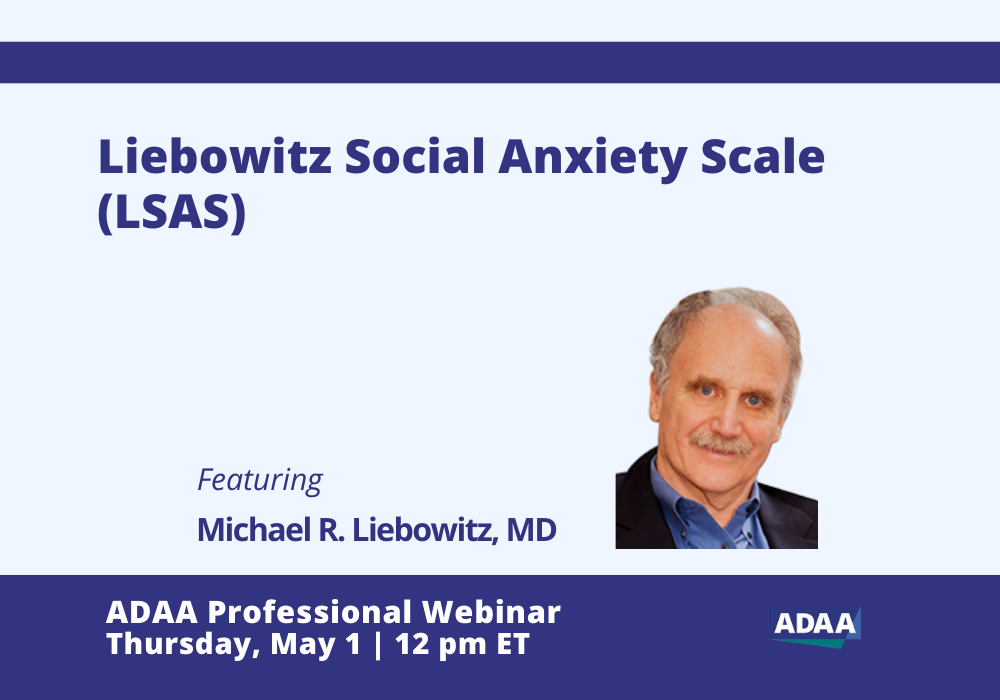
Although the LSAS is the first and premiere assessment for measuring social anxiety severity, some take liberties when administering the assessment. Although it was designed as a clinician-administer measure, some use it as a self-report measure. Even more advanced clinicians may struggle to explain the difference between fear and avoidance when administering the assessment. This webinar explains the importance of the nuances and why it was designed as it was as well as the difference it makes in accurately assessing patient's social anxiety severity. Most master's level clinicians take one course in assessments to earn their degree. As these professors aren't anxiety specialists, they cannot differentiate the nuance of avoidance as a values or interest preference vs a compulsive behavior. As a result, when administering the LSAS these clinicians do not realize the importance of explaining the thinking behind avoidant behaviors, which can vastly alter the scores.
Learning Objectives

Take Action
Find Help. Learn More. Support ADAA.








ADAA Continuing Education Credits for Live and On-Demand Programming
Learners complete an evaluation form to receive a certificate of completion. You must participate in the entire activity as partial credit is not available. If you are seeking continuing education credit for a specialty not listed below, it is your responsibility to contact your licensing/certification board to determine course eligibility for your licensing/certification requirement.
Some ADAA professional webinars focused on diversity or cultural competency subject matter are eligible for the Cross-Culture Competency Diversity Credit. If a webinar is eligible for this credit, it will be reflected on your credit certificate.
All continuing education credits are provided through Amedco, LLC. Learn more about the CE/CME accreditation information here.