Your support changes lives. Thank you!
Learn More
Is my OCD going to get worse during pregnancy or after giving birth? The worry that OCD symptoms…
Following childbirth, other known as "postpartum", women may experience postpartum disorders that can affect their mental health. The high hormonal changes and fluctuations that occur during and after childbirth could cause mothers to feel intense mood swings called "the baby blues" which affects 80% of mothers.1 If symptoms persist for more than a couple weeks, then it could potentially be something more severe such as a postpartum disorder.
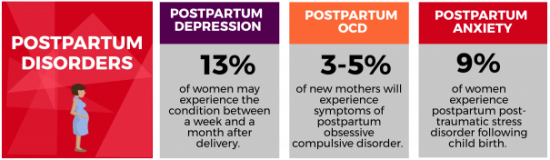
Postpartum Depression, or PPD, is a mood disorder in women shortly after childbirth. Mothers with PPD experience feelings of extreme sadness, anxiety, and exhaustion that can affect the woman's ability to care for herself or for others. Click here to learn more about postpartum depression.
Signs and symptoms for PPD are the same as those for clinical depression.
In women with postpartum depression, symptoms usually begin within the first four weeks of giving birth, although some women report decreasing mood in the late third trimester of pregnancy.
Postpartum Obsessive-Compulsive Disorder is one of the most misunderstood perinatal disorders. Women with OCD tend to attribute the onset or worsening of their symptoms during pregnancy or postpartum. Click here to learn more about postpartum obsessive-compulsive disorder
Postpartum Post-Traumatic Stress Disorder is PTSD associated with pregnancy. Approximately 9% of women experience postpartum post-traumatic stress disorder (PTSD) following childbirth.2
Postpartum Bipolar Disorder (Peripartum Bipolar Disorder) is characterized by mood episodes—mania, hypomania or depression—that can begin during pregnancy or in the weeks after childbirth. Early recognition of women with bipolar disorder in pregnancy is critical as the risk of postpartum depression is high. Working with a mental health clinician to use evidence-based therapy, appropriate medication, and bright light therapy is needed to treat bipolar disorder. Read about treatment for peripartum bipolar disorder. Learn more here. Read a personal story about coping with postpartum bipolar disorder here.
New! ADAA's new infographic in partnership with Postpartum Society International: Postpartum Depression & Anxiety.
To learn more in-depth about Postpartum Disorder and treatments, check out ADAA's Patient Guide to Mood and Anxiety Disorders.
Postpartum disorders are temporary and treatable with professional help. Learn more here
If you or someone you know may be suffering from a mental illness, notify your healthcare provider or Find a Therapist.
Videos and Books:
Webinars:
Blogs:
Personal Stories:

Take Action
Find Help. Learn More. Support ADAA.