Your support changes lives. Thank you!
Learn More
06.12.2026
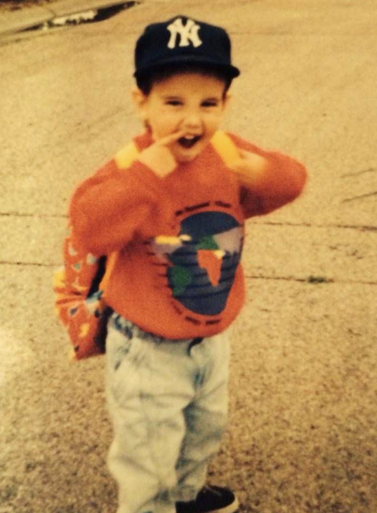
Between the ages of ten and sixteen, life blurred into something he learned to survive rather than live. He grew up in an abusive household in Boise, where alcohol and conflict were constants. From a young age, Alex became finely tuned to the energy in a room. He could feel anger before it arrived. And when he sensed it coming, he would slip out of the house or disappear into his room before things had the chance to escalate.
His parents divorced when he was five. As an only child, he grew up quickly, taking care of himself, starting dinner before his mother came home late from work. The one steady presence through all of it was his maternal grandfather, grounded and levelheaded, someone Alex could turn to when everything else felt unstable.
When his mother remarried, the pattern continued. His stepfather also struggled with alcohol, inviting a new wave of conflict which resulted in an incident where the stepfather physically assaulted Alex against the garage wall. Neighbors called the police; it wasn't the first time, and it wouldn't be the last.
He was also carrying something physical. Alex was born with pectus excavatum, a birth defect that left his chest severely and asymmetrically concave, pressing against his heart and lungs. After his freshman year of high school, he had surgery at Shriners Hospital where two bars were inserted and cranked out to reshape his chest. Insurance had initially classified it as cosmetic. It was anything but.
The recovery was brutal. He spent days in the ICU, and at 5'11, came out of it weighing 99 pounds. He wasn't cleared for sports for six months. The bars stayed in for three years before being removed his senior year, leaving scars and a lasting numbness across his chest. His home life, the surgery, and high school blurred together into a period he was desperate to put behind him.
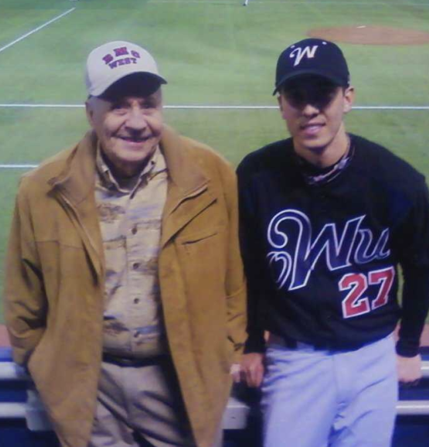
When his high school coach told him his career was over, Alex didn't accept it. He emailed community colleges until someone gave him a shot, walked on at Clackamas Community College, and eventually made his way to Oklahoma, where he won a national championship in 2011. Years later, that same coach called to ask Alex to coach summer baseball. It wasn't a dramatic moment, it was closure. Proof that the people who don't believe in you don't get to decide what you're capable of.
Leaving at eighteen had always been the goal. Once he did, the real work began. In his early twenties, Alex found himself searching for answers about his own mind, trying to understand what he was experiencing and whether something was wrong with him. He tried different things looking for clarity. Eventually he arrived at a quieter conclusion: he wasn't crazy. He found comfort in solitude. And slowly, he started learning to trust himself.
Later in adulthood came another life altering revelation; Alex was diagnosed as neurodivergent. Suddenly, a lot of things made sense. The way he could feel the energy shift in a room before anyone else noticed. The pattern recognition. The hyper-awareness to sound and environment. These weren't flaws to manage; they were tools. Angles of seeing and understanding the world that others don’t normally see. Now, he is simply learning how to wield them with purpose.
His grandfather passed away in 2021. It was a significant loss, but Alex says he still feels his presence with every new milestone. Their last conversation had settled something in him. His grandfather had mentioned the "struggle," and Alex came to understand that as a quiet wish he had held him closer, checked in more, given him a better seat at the table. Even in that, Alex could feel the love underneath it.
Not long before that, in his late-twenties, Alex had a falling out with his mother and stepfather after refusing to play along with a facade around the stepfather's family and their alcohol struggles. His grandfather had supported that decision. Having that validation, from the one person whose steadiness had carried him through so much, meant more than Alex could fully put into words.

Alex chose to share his story with ADAA because he did not want the difficult experiences he went through to define him or limit what he believed he could achieve. There were many moments when giving up felt justified, and plenty of reasons to stop trying. Still, he has never been someone who lets circumstances decide who he is, whether those pressures came from strangers or from within his own family. He stayed committed to who he is at his core and to the life he knew he wanted to build.
Not the noise. Not the loop of doubt that modern life makes so easy to fall into. Your own voice. Your own instincts. The ones you can only really hear when you get quiet enough to listen. Go outside. Unplug. Get still. That instinct has been there the whole time. It knows more than you think.

Take Action
Find Help. Learn More. Support ADAA.