
Your support changes lives. Thank you!
Learn More
Discover a structured framework for assessing patients’ AI chatbot use, including its frequency,…
Authored by: Gianna LaLota, LMHC-D, LPC
How Anxiety Narrows Life
Clients often remark to me that anxiety has completely narrowed their lives through avoidance. Anxiety’s function is to keep us safe, and it has a way of convincing us that the best way to ensure we are safe and protected is by avoiding our anxiety triggers altogether.
For someone with social anxiety, that might look like staying home instead of going to a networking event, never speaking up at work and missing out on career advancement opportunities, or never trying out that new restaurant you want to check out for fear of interacting with the waiter. For someone with panic disorder, that might look like avoiding the crowded train on their commute to work, not traveling far from home in case a panic attack strikes, or avoiding exercise or any activity that might elevate their heart rate. Slowly but surely, by avoiding your anxiety triggers over time, your life shrinks.
Avoidance is tempting because it provides short-term relief in the moment. What many people do not realize is what avoidance teaches your brain over time. It sends the message that whatever you avoided was dangerous, which increases your fear the next time you face that trigger.
The Role of Exposure Therapy
Exposure therapy is a therapeutic technique that involves gradually facing your anxiety triggers and feared outcomes over time. It is one of the most effective ways to overcome anxiety and begin getting your life back.
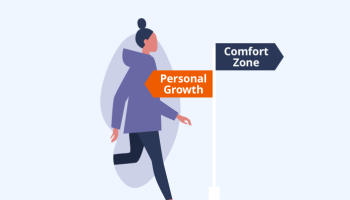
The goal of exposure therapy is to increase your confidence in your ability to cope with anxiety triggers and face them head-on. When done correctly, it can be incredibly empowering and help you feel more capable and confident in yourself. That said, it does require a willingness to tolerate discomfort. The first few times you practice an exposure, it will likely feel uncomfortable. This is a normal part of the process.
Over time, tolerating that discomfort teaches your brain: I may feel uncomfortable, but I am safe. I can tolerate this feeling. I do not have to avoid it. Many of the feared outcomes driven by anxiety are unlikely to happen, and even when they do not go perfectly, you are still able to cope.
What the Process Looks Like
The process of exposure therapy typically includes the following steps:
Examples of Exposure Exercises
Examples of exposure exercises for different anxiety disorders include:
The Importance of Targeting Safety Behaviors
Targeting safety behaviors is a key element of successful exposure therapy. The hard truth is that if you are not addressing safety behaviors, you are not doing true exposure work.
Avoidance means not entering a feared situation at all. Safety behaviors are more subtle. They are behaviors you engage in during a feared situation to reduce anxiety in the moment. In the short term, they decrease anxiety and provide relief. In the long term, they keep you stuck in the cycle of anxiety.
For example, if you struggle with social anxiety and attend a party to work on avoidance, but once there you stay glued to someone you know, limit your conversation topics, and rehearse what you are going to say before speaking, you are unintentionally teaching your brain that you were only able to get through the party because of those behaviors. You do not get the opportunity to learn that you could have managed without them.
The only way to truly overcome anxiety in the long term and build confidence in yourself is to gradually let go of those safety behaviors so you can see that you do not need them to cope.
Examples of safety behaviors include:
Practical Mechanisms Behind Change
Exposure therapy helps you approach the things anxiety once convinced you to avoid, giving you your life back. Through exposures, you test the predictions rooted in anxiety and see whether the outcome is as catastrophic as you anticipated.
For example, if you fear public speaking, you might predict that your face will turn red, you will lose your train of thought, and others will judge or laugh at you. Exposure allows you to put that prediction to the test. Did it turn out exactly as you imagined, or was there another possible outcome?
Importantly, even if some of your feared outcomes do happen, what did you learn about yourself in the process? Are you able to tolerate discomfort? Are you able to recover? Over time, you build confidence in your ability to cope and become better able to assess the true level of threat in a situation.
Signs Exposure Therapy Is Helping
Exposure work takes time, repetition, and a willingness to tolerate discomfort, but the reward is worth the effort. In my work, I have seen clients with social anxiety who once feared making small talk develop meaningful friendships at work. I have seen clients with panic disorder board flights to visit family they had not seen in years. I have seen clients with health anxiety begin to trust their bodies again.
Clear signs that exposure therapy is working include feeling capable in situations you once avoided, living a fuller life, and making decisions based on your values rather than letting anxiety drive your choices.
Conclusion
Ultimately, exposure therapy allows people to move from avoidance to engagement. It helps you reclaim meaningful activities, build confidence, and experience life more fully.
Overcoming anxiety does not mean eliminating it entirely. It means learning that you can live a full and meaningful life even when anxiety shows up.



Take Action
Find Help. Learn More. Support ADAA.








ADAA Blog Content and Blog Comments Policy
ADAA provides this Website blogs for the benefit of its members and the public. The content, view and opinions published in Blogs written by our personnel or contributors – or from links or posts on the Website from other sources - belong solely to their respective authors and do not necessarily reflect the views of ADAA, its members, management or employees. Any comments or opinions expressed are those of their respective contributors only. Please remember that the open and real-time nature of the comments posted to these venues makes it is impossible for ADAA to confirm the validity of any content posted, and though we reserve the right to review and edit or delete any such comment, we do not guarantee that we will monitor or review it. As such, we are not responsible for any messages posted or the consequences of following any advice offered within such posts. If you find any posts in these posts/comments to be offensive, inaccurate or objectionable, please contact us via email at [email protected] and reference the relevant content. If we determine that removal of a post or posts is necessary, we will make reasonable efforts to do so in a timely manner.
ADAA expressly disclaims responsibility for and liabilities resulting from, any information or communications from and between users of ADAA’s blog post commenting features. Users acknowledge and agree that they may be individually liable for anything they communicate using ADAA’s blogs, including but not limited to defamatory, discriminatory, false or unauthorized information. Users are cautioned that they are responsible for complying with the requirements of applicable copyright and trademark laws and regulations. By submitting a response, comment or content, you agree that such submission is non-confidential for all purposes. Any submission to this Website will be deemed and remain the property of ADAA.
The ADAA blogs are forums for individuals to share their opinions, experiences and thoughts related to mental illness. ADAA wants to ensure the integrity of this service and therefore, use of this service is limited to participants who agree to adhere to the following guidelines:
1. Refrain from transmitting any message, information, data, or text that is unlawful, threatening, abusive, harassing, defamatory, vulgar, obscene, that may be invasive of another 's privacy, hateful, or bashing communications - especially those aimed at gender, race, color, sexual orientation, national origin, religious views or disability.
Please note that there is a review process whereby all comments posted to blog posts and webinars are reviewed by ADAA staff to determine appropriateness before comments are posted. ADAA reserves the right to remove or edit a post containing offensive material as defined by ADAA.
ADAA reserves the right to remove or edit posts that contain explicit, obscene, offensive, or vulgar language. Similarly, posts that contain any graphic files will be removed immediately upon notice.
2. Refrain from posting or transmitting any unsolicited, promotional materials, "junk mail," "spam," "chain mail," "pyramid schemes" or any other form of solicitation. ADAA reserves the right to delete these posts immediately upon notice.
3. ADAA invites and encourages a healthy exchange of opinions. If you disagree with a participant 's post or opinion and wish to challenge it, do so with respect. The real objective of the ADAA blog post commenting function is to promote discussion and understanding, not to convince others that your opinion is "right." Name calling, insults, and personal attacks are not appropriate and will not be tolerated. ADAA will remove these posts immediately upon notice.
4. ADAA promotes privacy and encourages participants to keep personal information such as address and telephone number from being posted. Similarly, do not ask for personal information from other participants. Any comments that ask for telephone, address, e-mail, surveys and research studies will not be approved for posting.
5. Participants should be aware that the opinions, beliefs and statements on blog posts do not necessarily represent the opinions and beliefs of ADAA. Participants also agree that ADAA is not to be held liable for any loss or injury caused, in whole or in part, by sponsorship of blog post commenting. Participants also agree that ADAA reserves the right to report any suspicions of harm to self or others as evidenced by participant posts.