Your support changes lives. Thank you!
Learn More
What comes to mind when you think of events that may be the cause of post-traumatic stress disorder…
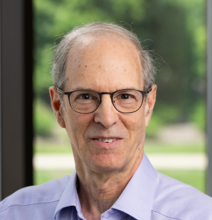
Authored by: James Abelson, MD, PhD
George Curtis, MD founded the University of Michigan Anxiety Disorders Program between 1976 and 1978. We believe that it was the third anxiety specialty clinic in the U.S. and the first within the walls of an academic medical center.
George reports that he served on the PSA board happily for a number of years, until Jerilyn had it on solid footing as an active, successful, patient-focused educational and advocacy organization. At that point, George let Jerilyn know that it was time for him to step down from her board, since things were going well and she no longer needed his expertise. In efforts to motivate him to stay, she asked how she could more fully utilize his expertise. He suggested that she could add a science-focused component to her advocacy organization. Jerilyn being Jerilyn, she of course immediately did so, and George remained on the board.
I think they began having national meetings of the Phobia Society around 1981. I don’t know much about how those began or how they built the scientific component of those meetings, but I do recall vividly that George invited me to make my first national meeting symposium presentation at the 10th National Conference on Anxiety Disorders in Bethesda, Maryland, on March 17, 1990, hosted by what by then had become the Anxiety Disorders Association of America.
George asked me to analyze and present the results of one of his early, pioneering studies, which I helped him complete as a psychiatric resident and then research fellow in 1988-1989. The talk was in a symposium that George was chairing and it was a very data-rich presentation on “responses to clonidine in generalized anxiety disorder.”
That presentation is now one of the most vivid and endearing memories of my entire career, and an exemplar of the ways in which that career became so deeply entwined with the ADAA. I was the second speaker. As was the very primitive practice in those days, slides were presented on a Kodak Carousel slide projector. The projector was in the middle of the room, and it made a fair amount of noise, so it was turned off during the Q&A for the first presentation.
It was then my turn, and as I approached the lectern, someone flipped the projector back on and the bulb within it immediately exploded in a puff of smoke. I was quite anxious already, but then just shocked and flabbergasted. I turned slowly towards George, who was seated at a table next to the lectern, and asked him what I should do. George, in his own inimitable, laconic, southern-gentleman kind of way, gently but assertively said “I guess you will have to give the talk without your slides.” Now I was dumbfounded. The bulk of my slides were complex data graphs, of the temporal responses of growth hormone and maybe 12 other biological variables to intravenous infusions of clonidine. How could I possibly give the esteemed scientists in the audience a meaningful verbal description of all those data?
As I was mulling this over, a young guy with a big, bushy black beard, sitting in the first row, raised his hand and said to George, “I see we have a short break scheduled after the next speaker. Why don’t we take that break now, and see if we can find the AV guy to replace the bulb?” George said, “good idea.” The stranger went and found the AV guy, who quickly replaced the bulb, and I somehow got through my first national presentation.
When the symposium ended, I ran up to my savior, shook his hand, and thanked him profusely. He introduced himself as Manny Tancer, a fellow in the NIMH Intramural Program on Anxiety. He then introduced me to his boss, the Director of that program, Tom Uhde, and his fellow fellow, Murray Stein. The three of them quickly became my first and in many ways my most important professional friends, bonding over shared interests in science and in basketball, watching March Madness together over many years, as it then almost always occurred during the ADAA meeting (and which the University of Michigan had won the year before in 1989, and then won again in 2026, nicely bracketing my ADAA career, which began with that talk in 1990 and sort of ended in 2026 when I retired and then resigned from ADAA’s Scientific Council after 23 years of service on it).
The most endearing parts of this story, however, began in 2009 when one of my favorite nephews married one of Manny Tancer’s favorite nieces, and continued in subsequent years as we became co-great-uncles to 3 delightful kids and repeatedly crossed paths at family events.
As I write this, in the midst of my own retirement process, and reflecting on the seemingly vast collection of interwoven threads that comprise a life that is both personal and professional, I am deeply moved by the many ways in which my connections with ADAA have been an important part of my life’s tapestry.
But getting back to the main thread, science has been a central part of ADAA’s mission ever since George helped Jerilyn weave it into the association’s own tapestry, but its strength has ebbed and flowed.
It was at a relatively low ebb in 1998, when someone had the bright idea of trying to rejuvenate it by inviting the world’s leading anxiety researchers to an all-day, preconference symposium focused on the translational neuroscience of stress and anxiety, for the first annual Scientific Satellite Meeting (now the Scientific Research Symposium). The neuroscience of the fear circuitry was just emerging, and the idea was to get the most cutting-edge science presented at an ADAA meeting, to get the leading anxiety-focused scientists in the world to the meeting site to talk about it, and to get a small group of the rest of us there to listen and participate and figure out how to translate all this great science to clinical relevance.
It was invitation only, to keep it small and intimate, and structured to allow extended periods of open discussion, among the speakers and with the audience. I got an invitation because of George. It was the most inspirational scientific experience of my life, to sit there and listen to Michael Davis, Scott Rauch, Peter Lang, James McGaugh, Hans Breiter, Joe LeDoux, Steve Hymen, Dennis Charney, Jonathan Davidson, Abby Fyer, Bruce Lydiard, Rachel Yehuda, and Murray Stein present their research, talk among themselves, and engage an audience filled with people like Jack Gorman, Tom Uhde, Michael Liebowitz, George Curtis and many more in extended discussions.
Steve Hyman suggested an annual, continuously updating event – exposing clinical and translational researchers to cutting-edge basic scientists who were dissecting critical mechanisms in their labs. Though the nature of the symposium and its format have changed over the years, it remains a highlight of the annual meeting.
That first satellite event inspired me to even more deeply commit to ADAA as my primary scientific home and my most important annual meeting (I have missed only one since 1990). It also inspired me to do all I could to get myself onto what was then called the Scientific Advisory Board (now the Scientific Council), for the express purpose of helping to plan future Satellite Symposia and hoping to eventually chair one.
I had my opportunity to do that in 2008. I wanted to create something akin to the first one, but now extending our circuitry “beyond the amygdala.” That became the 11th Annual Scientific Research Symposium, presented in Savannah, Georgia on March 6, 2008, entitled “Emotion Regulation and the Expanding Neurocircuitry of Fear,” and featuring presentations by Steve Maren, Helen Barbas, Nathan Fox, Kevin Ochsner, Sonia Bishop, K. Luan Phan, and Israel Liberzon. It was then still an all-day, pre-conference, invitation-only event. Michael Liebowitz was in attendance and told me afterwards that he thought it was the best one since the first, which was one of the most gratifying pieces of presentation feedback that I had ever received.
On a final, personal note, the National Service section of my academic CV consists entirely of service to ADAA:
COMMITTEE AND ADMINISTRATIVE SERVICE
National
1990-2008 Anxiety Disorders Association of America, Scientific Program Committee for the 1991, 1993, 1994, 2006, 2007, 2008 annual meetings
1998-2004 Anxiety Disorders Association of America, Clinical and Education Program
Review Committee for 1999, 2003, 2004 annual meetings
2003-2011 Anxiety Disorders Association of America, Scientific Advisory Board
2003-2007 Anxiety Disorders Association of America, Trainee and Career Development Travel Award Selection Committee
2008-2014 Anxiety Disorders Association of American, Donald F. Klein Early Career Investigator Award – development and selection committee (Chair)
2009-2016 Anxiety Disorders Association of American, Chair of Task Force to develop and manage a mentorship program for trainee travel award winners at annual meeting.
2012-2026 Anxiety & Depression Association of America, Scientific Council
2018-2023 Anxiety & Depression Association of American, Steering Committee member for the Alies Muskin Career Development Leadership Program.


Take Action
Find Help. Learn More. Support ADAA.





ADAA Blog Content and Blog Comments Policy
ADAA provides this Website blogs for the benefit of its members and the public. The content, view and opinions published in Blogs written by our personnel or contributors – or from links or posts on the Website from other sources - belong solely to their respective authors and do not necessarily reflect the views of ADAA, its members, management or employees. Any comments or opinions expressed are those of their respective contributors only. Please remember that the open and real-time nature of the comments posted to these venues makes it is impossible for ADAA to confirm the validity of any content posted, and though we reserve the right to review and edit or delete any such comment, we do not guarantee that we will monitor or review it. As such, we are not responsible for any messages posted or the consequences of following any advice offered within such posts. If you find any posts in these posts/comments to be offensive, inaccurate or objectionable, please contact us via email at [email protected] and reference the relevant content. If we determine that removal of a post or posts is necessary, we will make reasonable efforts to do so in a timely manner.
ADAA expressly disclaims responsibility for and liabilities resulting from, any information or communications from and between users of ADAA’s blog post commenting features. Users acknowledge and agree that they may be individually liable for anything they communicate using ADAA’s blogs, including but not limited to defamatory, discriminatory, false or unauthorized information. Users are cautioned that they are responsible for complying with the requirements of applicable copyright and trademark laws and regulations. By submitting a response, comment or content, you agree that such submission is non-confidential for all purposes. Any submission to this Website will be deemed and remain the property of ADAA.
The ADAA blogs are forums for individuals to share their opinions, experiences and thoughts related to mental illness. ADAA wants to ensure the integrity of this service and therefore, use of this service is limited to participants who agree to adhere to the following guidelines:
1. Refrain from transmitting any message, information, data, or text that is unlawful, threatening, abusive, harassing, defamatory, vulgar, obscene, that may be invasive of another 's privacy, hateful, or bashing communications - especially those aimed at gender, race, color, sexual orientation, national origin, religious views or disability.
Please note that there is a review process whereby all comments posted to blog posts and webinars are reviewed by ADAA staff to determine appropriateness before comments are posted. ADAA reserves the right to remove or edit a post containing offensive material as defined by ADAA.
ADAA reserves the right to remove or edit posts that contain explicit, obscene, offensive, or vulgar language. Similarly, posts that contain any graphic files will be removed immediately upon notice.
2. Refrain from posting or transmitting any unsolicited, promotional materials, "junk mail," "spam," "chain mail," "pyramid schemes" or any other form of solicitation. ADAA reserves the right to delete these posts immediately upon notice.
3. ADAA invites and encourages a healthy exchange of opinions. If you disagree with a participant 's post or opinion and wish to challenge it, do so with respect. The real objective of the ADAA blog post commenting function is to promote discussion and understanding, not to convince others that your opinion is "right." Name calling, insults, and personal attacks are not appropriate and will not be tolerated. ADAA will remove these posts immediately upon notice.
4. ADAA promotes privacy and encourages participants to keep personal information such as address and telephone number from being posted. Similarly, do not ask for personal information from other participants. Any comments that ask for telephone, address, e-mail, surveys and research studies will not be approved for posting.
5. Participants should be aware that the opinions, beliefs and statements on blog posts do not necessarily represent the opinions and beliefs of ADAA. Participants also agree that ADAA is not to be held liable for any loss or injury caused, in whole or in part, by sponsorship of blog post commenting. Participants also agree that ADAA reserves the right to report any suspicions of harm to self or others as evidenced by participant posts.