Your support changes lives. Thank you!
Learn More
Discover a structured framework for assessing patients’ AI chatbot use, including its frequency,…
Book authors: Michelle Sherman, PhD, LP, ABPP, Elisa Nebolsine, LCSW, and Marni L. Jacob, PhD, ABPP
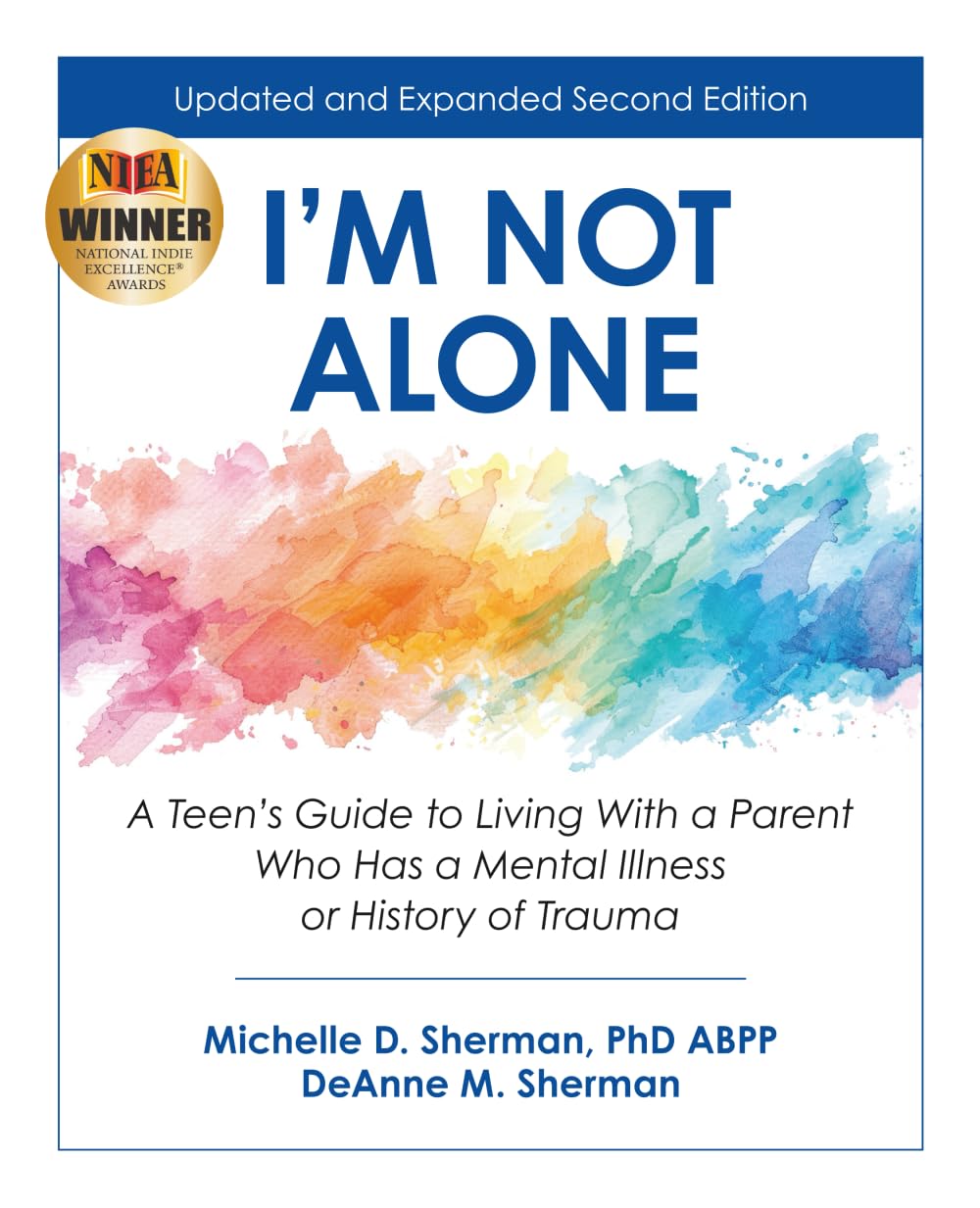
Acutely aware of the gap in resources for teenagers whose parents manage mental illness and the toll it can take on a young person, ADAA member Michelle Sherman, PhD, LP, ABPP wanted to publish a book that would support this demographic of teens.
Co-written with her mother, DeAnne Sherman, I'm Not Alone: A Teen's Guide to Living with a Parent Who Has a Mental Illness or History of Trauma is a second edition that builds and expands on what has changed for teenagers since the first edition written 20 years ago. The guide considers the increase in mental health information (via the internet and social media), the growth of new treatments, and more awareness in promoting resilience in youth.
“There are books on dealing with a parent who has cancer or dementia, but not really parental mental illness,” Dr. Sherman says about why there was a need for her guide. “While there are memoirs and fictional stories, we could not find any nonfiction books with research-based information that draw upon stories from youth who share their personal experiences or offer opportunities for teens to process and write about those experiences through guided journaling and reflection exercises, for example.”
The guide is ideal for:
With 30 years of expertise supporting families managing mental illness and trauma, Dr. Sherman has provided an array of services to youth and families in a variety of settings. She has been writing books for families for over 20 years and wanted to create a really strong second edition with this publication.
“Having a parent with a mental illness can feel lonely for teens, but they are not alone,” Dr. Sherman stresses. “There’s no reason to feel ashamed or embarrassed; it’s important to find people who are supportive and understanding. My book can be a source of hope and comfort to a struggling teen.”
Order I'm Not Alone: A Teen's Guide to Living with a Parent Who Has a Mental Illness or History of Trauma (2nd Edition) by Michelle Sherman, PhD, LP, ABPP and DeAnne Sherman.
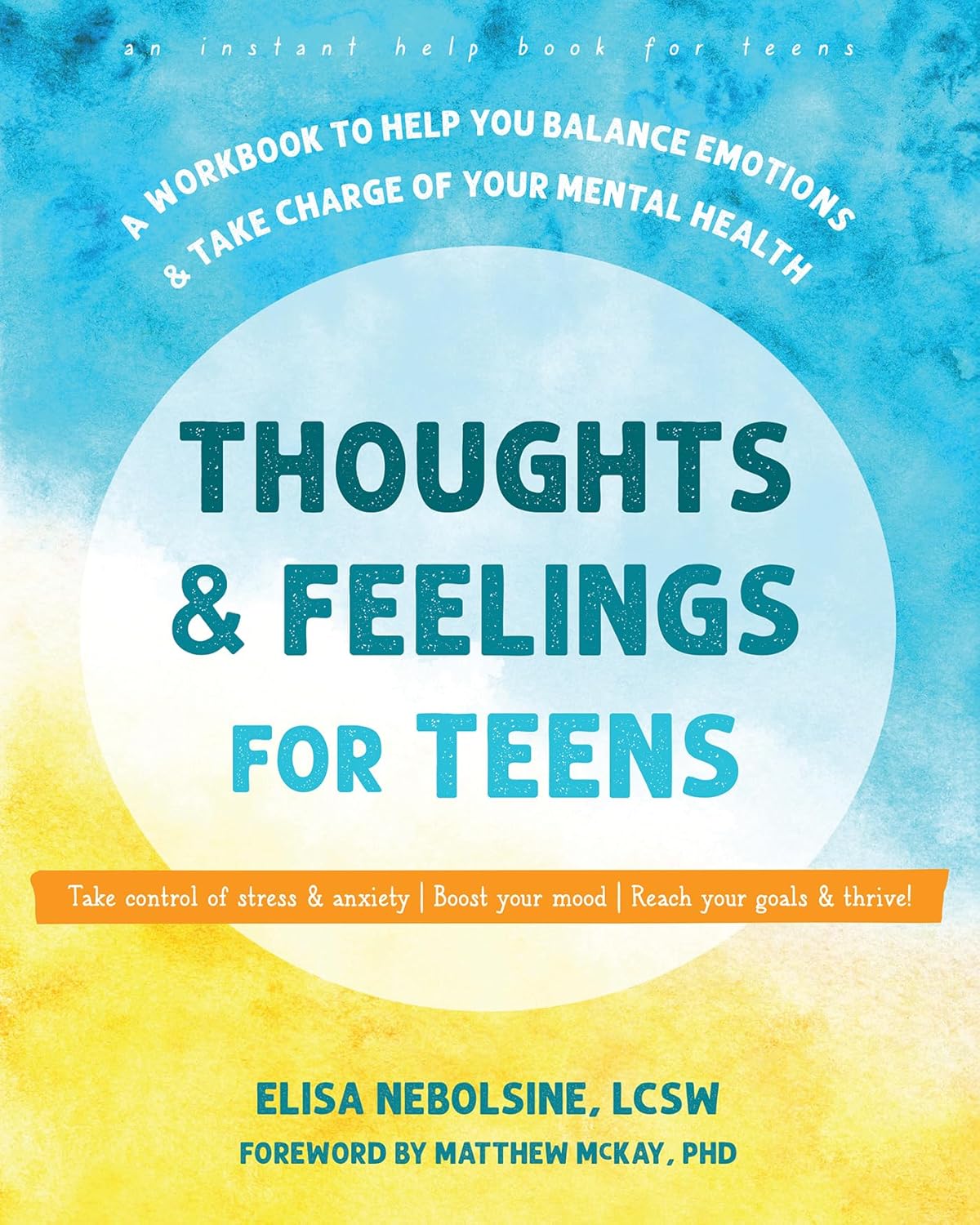
ADAA member Elisa Nebolsine, LCSW believes deeply in teenagers' capacity to understand their own minds. With over 25 years of clinical experience and a role as Adjunct Faculty at the Beck Institute, Nebolsine knows that teens are capable of understanding far more about their emotions than we often give them credit for.
Her newest book, Thoughts and Feelings for Teens: A Workbook to Help You Balance Emotions and Take Charge of Your Mental Health, takes an engaging and empowering approach to give teens information about how the brain works and provide skills to help with emotional regulation, anxiety and stress.
"Teens deserve access to that knowledge," Nebolsine says. "There's no reason it should be reserved for clinicians or adults, and when it's explained clearly and respectfully, teens can understand and use it."
Important approaches in the workbook include:
Understanding that teens often feel overwhelmed without the language to describe what's happening inside them, Nebolsine wanted to create something that meets them where they are. The workbook reflects "years of sitting with teens and listening carefully to how they experience their thoughts and emotions," she explains, paying close attention to what helps and what doesn't.
Rather than prescribing a rigid path, the book trusts teens to use the material in a way that works for them. "There's no expectation to move straight through or 'do it right,'" Nebolsine says. "Respecting the teen's autonomy to work at their own pace, in their own order, and as often as they need to is essential."
She adds that teens often interpret intense or confusing emotional experiences as signs that something is wrong rather than as part of normal development. While learning to tolerate discomfort is part of growing up, teens don't need to struggle simply for the sake of struggling.
"You're not broken," Nebolsine tells teens. "Your brain is learning and changing, and you can learn to work with it, not against it."
Order Thoughts and Feeling for Teens: A Workbook to Help You Balance Emotions and Take Charge of Your Mental Health by Elisa Nebolsine, LCSW.
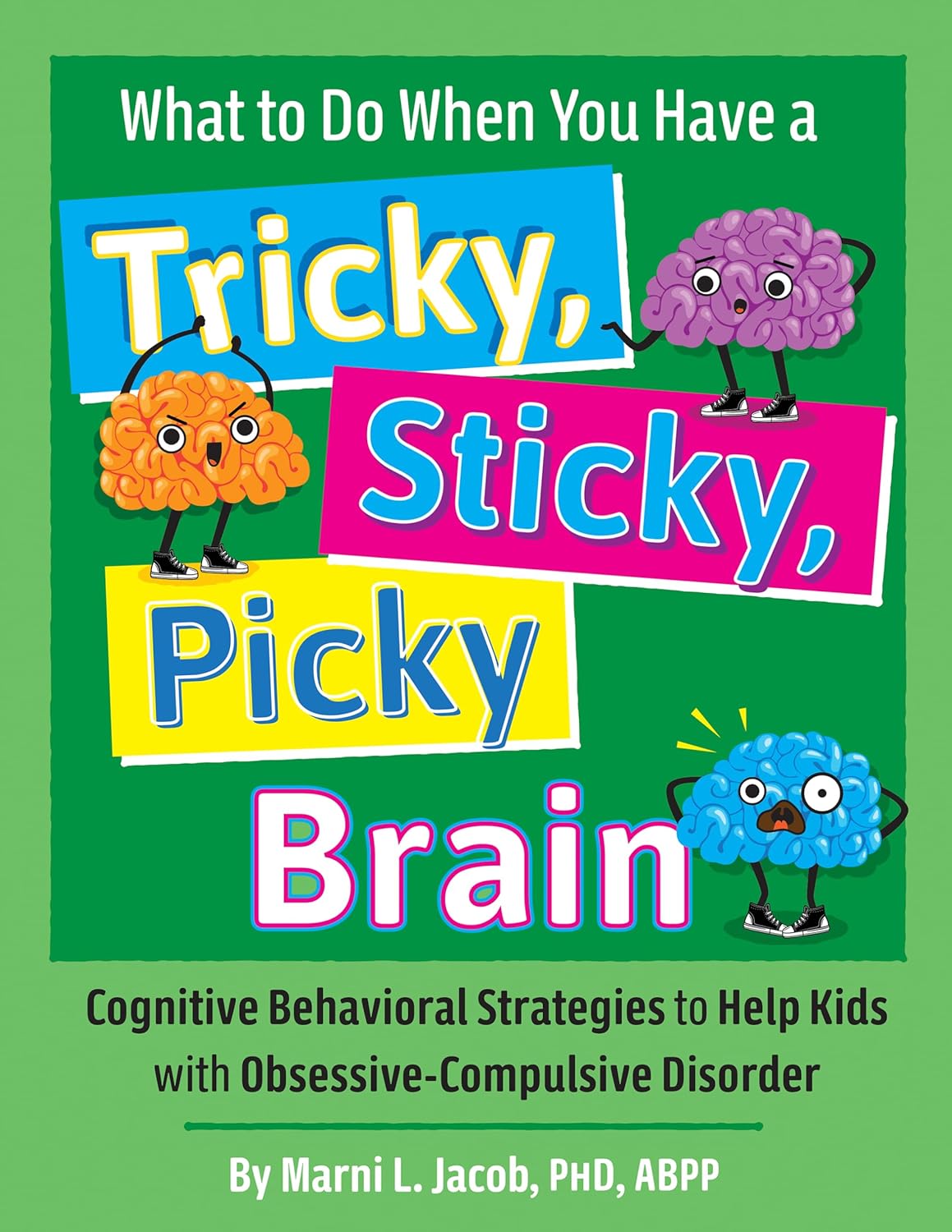
Over the 20+ years that ADAA member Marni L. Jacob, PhD, ABPP has worked with children and adolescents, she has gained a lot of insight into pediatric OCD. She has seen a lot of kids and answered thousands of questions from them. It makes complete sense that her new book considers their thoughts and feelings and offers thorough explanations and details of how OCD works and how to treat it.
What to Do When You Have a Tricky, Sticky, Picky Brain: Cognitive Behavioral Strategies to Help Kids with Obsessive-Compulsive Disorder is a practical, easy to use resource that kids and clinicians alike can access. Compassionate, comprehensive and rooted in science, the book tackles a tough but treatable disorder and offers hope to children and families who might be feeling discouraged and alone.
Dr. Jacob says she wants young readers to feel empowered to gain control of their OCD, and clinicians to feel more confident in working with pediatric OCD. “I want the book to help children and teens understand OCD, guide them in applying treatment strategies and regaining control over their lives, while also serving as an invaluable tool for parents, clinicians, and educators.”
Important and outstanding aspects of What to Do When You Have a Tricky, Sticky, Picky Brain include:
This book has an incredible breadth and depth that make it stand out as a go-to guide for pediatric OCD. Through the strategies, descriptions, and stories in the book, Dr. Jacob hopes to minimize shame and stigma and show children with OCD that they can get better and learn to manage the tricky, sticky, and picky nature of OCD.
“My hope is that kids with OCD will see themselves in the book and feel less alone.”
Order What to Do When You Have a Tricky, Sticky, Picky Brain: Cognitive Behavioral Strategies to Help Kids with Obsessive-Compulsive Disorder by Marni L. Jacob, PhD, ABPP with a foreword by ADAA member Eric Storch, PhD.



Take Action
Find Help. Learn More. Support ADAA.




ADAA Blog Content and Blog Comments Policy
ADAA provides this Website blogs for the benefit of its members and the public. The content, view and opinions published in Blogs written by our personnel or contributors – or from links or posts on the Website from other sources - belong solely to their respective authors and do not necessarily reflect the views of ADAA, its members, management or employees. Any comments or opinions expressed are those of their respective contributors only. Please remember that the open and real-time nature of the comments posted to these venues makes it is impossible for ADAA to confirm the validity of any content posted, and though we reserve the right to review and edit or delete any such comment, we do not guarantee that we will monitor or review it. As such, we are not responsible for any messages posted or the consequences of following any advice offered within such posts. If you find any posts in these posts/comments to be offensive, inaccurate or objectionable, please contact us via email at [email protected] and reference the relevant content. If we determine that removal of a post or posts is necessary, we will make reasonable efforts to do so in a timely manner.
ADAA expressly disclaims responsibility for and liabilities resulting from, any information or communications from and between users of ADAA’s blog post commenting features. Users acknowledge and agree that they may be individually liable for anything they communicate using ADAA’s blogs, including but not limited to defamatory, discriminatory, false or unauthorized information. Users are cautioned that they are responsible for complying with the requirements of applicable copyright and trademark laws and regulations. By submitting a response, comment or content, you agree that such submission is non-confidential for all purposes. Any submission to this Website will be deemed and remain the property of ADAA.
The ADAA blogs are forums for individuals to share their opinions, experiences and thoughts related to mental illness. ADAA wants to ensure the integrity of this service and therefore, use of this service is limited to participants who agree to adhere to the following guidelines:
1. Refrain from transmitting any message, information, data, or text that is unlawful, threatening, abusive, harassing, defamatory, vulgar, obscene, that may be invasive of another 's privacy, hateful, or bashing communications - especially those aimed at gender, race, color, sexual orientation, national origin, religious views or disability.
Please note that there is a review process whereby all comments posted to blog posts and webinars are reviewed by ADAA staff to determine appropriateness before comments are posted. ADAA reserves the right to remove or edit a post containing offensive material as defined by ADAA.
ADAA reserves the right to remove or edit posts that contain explicit, obscene, offensive, or vulgar language. Similarly, posts that contain any graphic files will be removed immediately upon notice.
2. Refrain from posting or transmitting any unsolicited, promotional materials, "junk mail," "spam," "chain mail," "pyramid schemes" or any other form of solicitation. ADAA reserves the right to delete these posts immediately upon notice.
3. ADAA invites and encourages a healthy exchange of opinions. If you disagree with a participant 's post or opinion and wish to challenge it, do so with respect. The real objective of the ADAA blog post commenting function is to promote discussion and understanding, not to convince others that your opinion is "right." Name calling, insults, and personal attacks are not appropriate and will not be tolerated. ADAA will remove these posts immediately upon notice.
4. ADAA promotes privacy and encourages participants to keep personal information such as address and telephone number from being posted. Similarly, do not ask for personal information from other participants. Any comments that ask for telephone, address, e-mail, surveys and research studies will not be approved for posting.
5. Participants should be aware that the opinions, beliefs and statements on blog posts do not necessarily represent the opinions and beliefs of ADAA. Participants also agree that ADAA is not to be held liable for any loss or injury caused, in whole or in part, by sponsorship of blog post commenting. Participants also agree that ADAA reserves the right to report any suspicions of harm to self or others as evidenced by participant posts.