

Your support changes lives. Thank you!
Learn More
Discover a structured framework for assessing patients’ AI chatbot use, including its frequency,…



Authored by: Amanda McGovern, PhD, and Megan Hughes Feltenberger, PhD
This post will guide you through how to support your child during this transition, not by eliminating anxiety, but by preparing them and helping them build confidence in facing the unknown. You’ll learn how to:
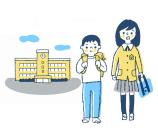
Back-to-school is a major time of change: new schedules, new teachers, maybe even a new school building or classmates. For kids who struggle with anxiety, these uncertainties can feel overwhelming. And when a parent is anxious too, the tendency to try and control every variable grows.
The instinct to smooth every bump in the road is completely understandable. But research and real-life experience show that doing so often makes anxiety worse in the long run. When kids aren’t given the chance to handle small doses of uncertainty or challenge, they miss the opportunity to build confidence and coping skills.
So, what can we do instead?
Practical planning can ease some anxiety, but how you do it matters. Instead of doing everything for your child, guide them to take an active role. That builds independence and helps them practice problem-solving in a supported way.
Here are a few ideas:
These small tasks help kids feel ownership and capability, even if they’re feeling nervous underneath.
School success isn’t just about supplies and schedules; it’s also about emotional regulation. One helpful tool is the DBT PLEASE skill, which reminds us how physical habits impact emotional health. Teach your child to check in with these areas:
As the summer winds down, help your child gradually shift sleep and eating routines to match the school schedule. These changes can feel small, but they make a big impact on their emotional well-being.
This is the heart of the back-to-school anxiety dilemma: how do we show support without accidentally feeding the anxiety? The key is to validate feelings while showing confidence in your child’s ability to cope.
Here’s an example of what that sounds like:
“I know this feels really hard right now, and I also know you can handle it.”
This kind of supportive statement (a concept from SPACE treatment) sends a dual message: your child’s emotions are real, and you believe in their strength.
It’s also helpful to:
One of the best ways to help kids manage anxiety is exposure, letting them experience small, manageable doses of the things they fear.
That might look like:
Be cautious about making too many pre-arranged plans (like meeting every classmate before school starts), which can create false certainty and discourage your child from learning they can handle unknowns as they arise.
If your child asks to avoid or leave a situation due to anxiety, consider what’s driving that request. Are they seeking comfort—or avoiding discomfort? Use that as a cue to teach coping skills like:
The beginning of a new school year brings so many emotions; excitement, nervousness, joy, fear. That’s normal. And the goal isn’t to avoid all discomfort, it’s to help our kids learn how to face it, feel it, and move through it.
Sometimes the best thing we can do as parents is to step back, let go just a little, and trust that our children are capable of growing through challenge.
Let’s help them step into the unknown; not with the promise that everything will be perfect, but with the confidence that they can figure things out along the way.
What about you?
Want more support for parenting through life’s seasonal shifts?
Drs. Hughes and McGovern, two psychologist moms, are launching Oversubscribed, a free newsletter for working parents. Sign up here: https://hudsonrivertherapy.com/oversubscribed

Take Action
Find Help. Learn More. Support ADAA.








ADAA Blog Content and Blog Comments Policy
ADAA provides this Website blogs for the benefit of its members and the public. The content, view and opinions published in Blogs written by our personnel or contributors – or from links or posts on the Website from other sources - belong solely to their respective authors and do not necessarily reflect the views of ADAA, its members, management or employees. Any comments or opinions expressed are those of their respective contributors only. Please remember that the open and real-time nature of the comments posted to these venues makes it is impossible for ADAA to confirm the validity of any content posted, and though we reserve the right to review and edit or delete any such comment, we do not guarantee that we will monitor or review it. As such, we are not responsible for any messages posted or the consequences of following any advice offered within such posts. If you find any posts in these posts/comments to be offensive, inaccurate or objectionable, please contact us via email at [email protected] and reference the relevant content. If we determine that removal of a post or posts is necessary, we will make reasonable efforts to do so in a timely manner.
ADAA expressly disclaims responsibility for and liabilities resulting from, any information or communications from and between users of ADAA’s blog post commenting features. Users acknowledge and agree that they may be individually liable for anything they communicate using ADAA’s blogs, including but not limited to defamatory, discriminatory, false or unauthorized information. Users are cautioned that they are responsible for complying with the requirements of applicable copyright and trademark laws and regulations. By submitting a response, comment or content, you agree that such submission is non-confidential for all purposes. Any submission to this Website will be deemed and remain the property of ADAA.
The ADAA blogs are forums for individuals to share their opinions, experiences and thoughts related to mental illness. ADAA wants to ensure the integrity of this service and therefore, use of this service is limited to participants who agree to adhere to the following guidelines:
1. Refrain from transmitting any message, information, data, or text that is unlawful, threatening, abusive, harassing, defamatory, vulgar, obscene, that may be invasive of another 's privacy, hateful, or bashing communications - especially those aimed at gender, race, color, sexual orientation, national origin, religious views or disability.
Please note that there is a review process whereby all comments posted to blog posts and webinars are reviewed by ADAA staff to determine appropriateness before comments are posted. ADAA reserves the right to remove or edit a post containing offensive material as defined by ADAA.
ADAA reserves the right to remove or edit posts that contain explicit, obscene, offensive, or vulgar language. Similarly, posts that contain any graphic files will be removed immediately upon notice.
2. Refrain from posting or transmitting any unsolicited, promotional materials, "junk mail," "spam," "chain mail," "pyramid schemes" or any other form of solicitation. ADAA reserves the right to delete these posts immediately upon notice.
3. ADAA invites and encourages a healthy exchange of opinions. If you disagree with a participant 's post or opinion and wish to challenge it, do so with respect. The real objective of the ADAA blog post commenting function is to promote discussion and understanding, not to convince others that your opinion is "right." Name calling, insults, and personal attacks are not appropriate and will not be tolerated. ADAA will remove these posts immediately upon notice.
4. ADAA promotes privacy and encourages participants to keep personal information such as address and telephone number from being posted. Similarly, do not ask for personal information from other participants. Any comments that ask for telephone, address, e-mail, surveys and research studies will not be approved for posting.
5. Participants should be aware that the opinions, beliefs and statements on blog posts do not necessarily represent the opinions and beliefs of ADAA. Participants also agree that ADAA is not to be held liable for any loss or injury caused, in whole or in part, by sponsorship of blog post commenting. Participants also agree that ADAA reserves the right to report any suspicions of harm to self or others as evidenced by participant posts.