Your support changes lives. Thank you!
Learn More
What comes to mind when you think of events that may be the cause of post-traumatic stress disorder…



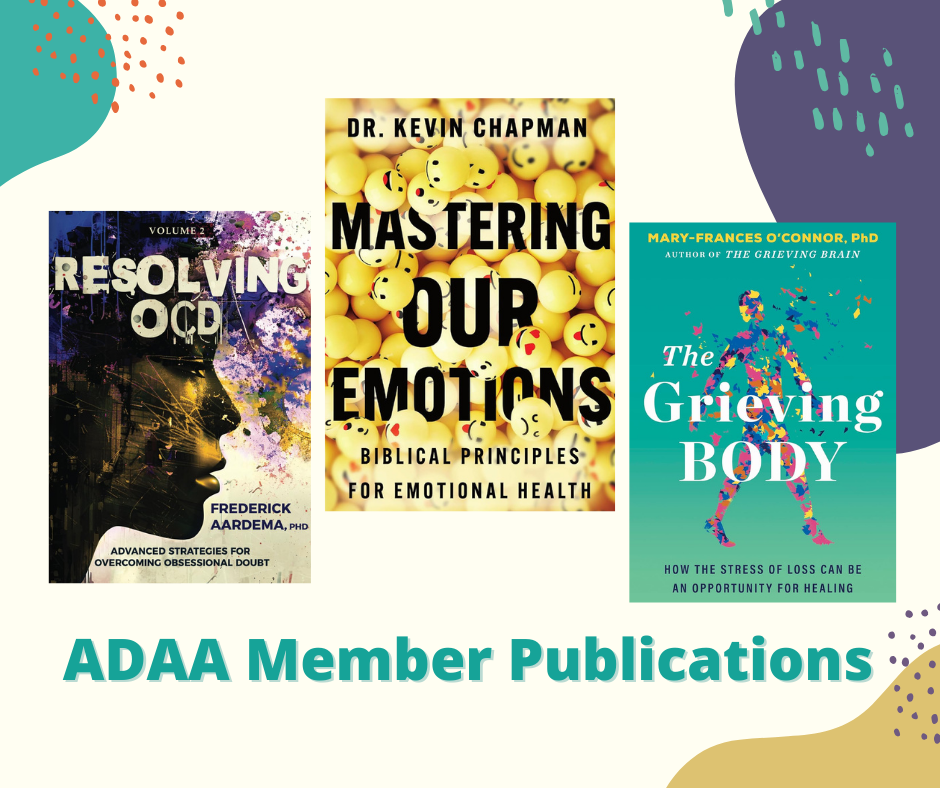
Book authors: Mary-Frances O'Connor, PhD, Frederick Aardema, PhD, and L. Kevin Chapman, PhD
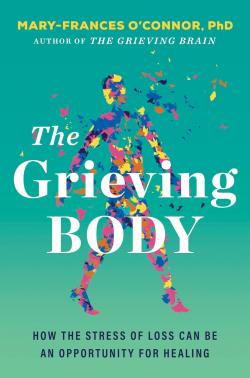
Grief is universal yet our culture is not very grief literate, says ADAA member Mary-Frances O'Connor, PhD, whose newest book once again tackles grief’s toll on us, but this time from the perspective of our physical bodies. Grief doesn’t just happen in the brain but can affect our anatomy too, including the heart, lungs, and muscles. Grief can be just as physically painful as it is mentally.
Dr. O’Connor’s newest book, The Grieving Body: How the Stress of Loss Can Be an Opportunity for Healing, is a sequel to her previous book on grief, The Grieving Brain: The Surprising Science of How We Learn From Love and Loss, but looks at how grief is reflected through physical symptoms.
While The Grieving Brain described what we know scientifically about why and how we grieve, The Grieving Body explains physiological responses during grief and how some medical risks are increased during bereavement. When grieving, our body attempts to compensate for the hole that has been left behind and tries to reregulate, says Dr. O’Connor, which often causes physical and mental symptoms.
Attempting to reregulate during grieving can cause symptoms such as:
“I want to motivate society to consider how we might address increased risks during grieving, from heart attacks to fatal pneumonia, and support the grieving body,” Dr. O’Connor told ADAA. “Like prenatal or cardiovascular care, I imagine a world where bereavement care includes testing for hypertension and providing education on how to develop new sleeping and eating patterns after the loss of our beloved.”
The book offers a description of what grief feels like as the author relates her story of suffering from physical ailments during grief. This is valuable as there are not many opportunities to witness the inner world of a grieving person, she says, and someone’s story can make us feel more normal, less alone.
“I hope to convey to the public – and even other clinicians - through my own personal stories of grief, over the death of my mother, and over my diagnosis with chronic illness, how life might be lived differently for a person who had access to the latest articles and studies on the grief response.”
Human relationships regulate our physiology, says Dr. O’Connor, including everything from our hormones to our neurochemistry to our cardiovascular and immune systems. The relationship system governs our reactions and interactions and our brain even relies on our loved one(s) to help us calm down or get motivated. Losing that bond can feel unbearable but we can learn more about how our body (and brain) responds to the stress of loss, and how to alleviate it. We have to be willing to listen and pay attention to what our bodies are telling us. We are capable of comforting ourselves and asking for kindness from others. We can strengthen our ties with living loved ones and connect with others who have loved, lost, and grieved. We are not alone in grieving. It is universal and it affects our hearts, minds, and bodies.
Order The Grieving Body: How the Stress of Loss Can Be an Opportunity for Healing (2025) and The Grieving Brain: The Surprising Science of How We Learn From Love and Loss (2022).
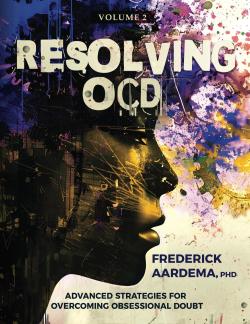
Traditional treatments for Obsessive-Compulsive Disorder focus on uncertainty tolerance or behavioral exposure, says ADAA member Frederick Aardema, PhD, who views and treats OCD as a disorder of reasoning and imagination. He says that is when a person confuses an entirely imagined possibility with a relevant probability. So what does that mean exactly? And how does that differ?
In his Resolving OCD book series (Volumes 1 and 2), Dr. Aardema offers readers what he calls an alternative, one that doesn’t focus so much on having patients learn to tolerate the uncertainty or rely heavily on exposure treatment but rather works to correct the “faulty reasoning process at the heart of OCD.”
In his latest volume, Resolving OCD: Advanced Strategies for Overcoming Obsessional Doubts (Volume 2), Dr. Aardema follows up his first volume, Resolving OCD: Understanding Your Obsessional Experience, with a step-by-step guide that leads to real resolution through Inference-Based Cognitive Behavioral Therapy (I-CBT). Evidence-based, studied and tested, I-CBT is an increasingly used treatment with rigorous research and results, making it a transformative and scientifically supported approach for OCD.
“OCD is frequently misunderstood, even by mental health professionals,” Dr. Aardema told ADAA. “Traditional treatments often emphasize managing symptoms rather than addressing the core reasoning and imaginative distortions that create obsessional doubt.”
Through his clinical work and writings, Dr. Aardema wants to make I-CBT more accessible to individuals struggling with OCD. Both of his books, which aim to introduce the therapy to a wider audience, dismantle obsessional doubt at its core to help individuals recognize that their doubts are entirely unnecessary, rather than something to endure, but each volume has a different approach.
“The books go beyond theory to provide interactive exercises, handouts, and diagrams to help readers track their progress and shift their thinking,” Dr. Aardema explained. “They are not just educational resources, but comprehensive guides for breaking free from OCD altogether.”
Written for both individuals with OCD and mental health professionals, the books provide a self-help approach while also serving as resources for clinicians. Individuals can work on their OCD independently through step-by-step exercises and strategies, or use them as a structured guide in therapy sessions with a clinician trained in I-CBT.
"OCD does not need to be managed - it can be resolved,” he said. “When you see through the illusion of obsessional doubt, the cycle collapses, and you regain control over your life."
Order Resolving OCD: Advanced Strategies for Overcoming Obsessional Doubts (Volume 2) 2025 and Resolving OCD: Understanding Your Obsessional Experience (Volume 1) 2024.
For millions of Americans, their faith is a part of who they are. It stands to reason then that millions of people requiring mental health treatment or receiving therapy are also religious and consider their faith an integral part of their being. But mental health treatment often doesn’t take into consideration how one’s religious or spiritual beliefs can be an important part of their mental health journey and perhaps help them through any anxiety, depression, or other difficult time they are having emotionally.
For L. Kevin Chapman, PhD, a clinician, lecturer, psychology consultant, public speaker, and Christian, his faith is central to his identity. He says it is often a misunderstood and misrepresented aspect of him, and for people of color especially, Christianity and Judeo-Christian beliefs can be so central to their lives that they should be included more widely in their mental and emotional wellbeing.
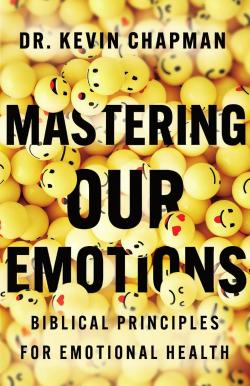
Dr. Chapman’s new book Mastering Our Emotions: Biblical Principles for Emotional Health is more of what he calls a “manual” for any members of a community - clinicians, therapists, pastors, counselors, church leaders, and Christian individuals, for example – who find it helpful. It was written as a practical resource that also applies scriptural concepts to managing emotions through evidence-based strategies.
“In my reviewing of the literature I didn’t find anything that does that well,” Dr. Chapman said, “this book is as an impetus to help people apply Biblical but also evidence-based strategies to deal with emotions.”
With readings, discussion questions, scriptures and prayers that relate to emotional experiences, and comparisons to people in the Bible who experienced intense emotionality, as well as worksheets and “homework assignments,” Mastering Our Emotions helps readers navigate their emotional experiences in a way that resonates with their Christian faith.
“I believe emotions come from God. They help us navigate the world but many people of faith still have difficulty with negative emotions,” Dr. Chapman told ADAA, “often presuming anger, shame, and guilt are bad emotions, so we try to push them away but that backfires and perpetuates those emotional cycles.”
Dr. Chapman says the main points his book tries to relay are:
He believes that all humans, whether Christian or of another faith or not, are designed to be masters of their emotions, not the other way around. Rather than blocking out negative or hurtful emotions, as Christians, he says you can “possess” them. This, Dr. Chapman uses in the Greek sense of the word possess, meaning to master. As in scripture Luke 21:19, he says, “by your patience possess your souls” to navigate and master emotions successfully. Dr. Chapman notes the book is meant to be an encouraging read, with an aim to provide a sense of hope to possess one’s emotions.
“My hope is the book helps clinicians who want to understand how faith can be a central part of one’s identity,” Dr. Chapman said, “and to give Christians who have a hard time, possibly from stigma associated with faith in many communities, a resource that respects this aspect central to who they are.”
Order Mastering Our Emotions: Biblical Principles for Emotional Health (2025).



Take Action
Find Help. Learn More. Support ADAA.








ADAA Blog Content and Blog Comments Policy
ADAA provides this Website blogs for the benefit of its members and the public. The content, view and opinions published in Blogs written by our personnel or contributors – or from links or posts on the Website from other sources - belong solely to their respective authors and do not necessarily reflect the views of ADAA, its members, management or employees. Any comments or opinions expressed are those of their respective contributors only. Please remember that the open and real-time nature of the comments posted to these venues makes it is impossible for ADAA to confirm the validity of any content posted, and though we reserve the right to review and edit or delete any such comment, we do not guarantee that we will monitor or review it. As such, we are not responsible for any messages posted or the consequences of following any advice offered within such posts. If you find any posts in these posts/comments to be offensive, inaccurate or objectionable, please contact us via email at [email protected] and reference the relevant content. If we determine that removal of a post or posts is necessary, we will make reasonable efforts to do so in a timely manner.
ADAA expressly disclaims responsibility for and liabilities resulting from, any information or communications from and between users of ADAA’s blog post commenting features. Users acknowledge and agree that they may be individually liable for anything they communicate using ADAA’s blogs, including but not limited to defamatory, discriminatory, false or unauthorized information. Users are cautioned that they are responsible for complying with the requirements of applicable copyright and trademark laws and regulations. By submitting a response, comment or content, you agree that such submission is non-confidential for all purposes. Any submission to this Website will be deemed and remain the property of ADAA.
The ADAA blogs are forums for individuals to share their opinions, experiences and thoughts related to mental illness. ADAA wants to ensure the integrity of this service and therefore, use of this service is limited to participants who agree to adhere to the following guidelines:
1. Refrain from transmitting any message, information, data, or text that is unlawful, threatening, abusive, harassing, defamatory, vulgar, obscene, that may be invasive of another 's privacy, hateful, or bashing communications - especially those aimed at gender, race, color, sexual orientation, national origin, religious views or disability.
Please note that there is a review process whereby all comments posted to blog posts and webinars are reviewed by ADAA staff to determine appropriateness before comments are posted. ADAA reserves the right to remove or edit a post containing offensive material as defined by ADAA.
ADAA reserves the right to remove or edit posts that contain explicit, obscene, offensive, or vulgar language. Similarly, posts that contain any graphic files will be removed immediately upon notice.
2. Refrain from posting or transmitting any unsolicited, promotional materials, "junk mail," "spam," "chain mail," "pyramid schemes" or any other form of solicitation. ADAA reserves the right to delete these posts immediately upon notice.
3. ADAA invites and encourages a healthy exchange of opinions. If you disagree with a participant 's post or opinion and wish to challenge it, do so with respect. The real objective of the ADAA blog post commenting function is to promote discussion and understanding, not to convince others that your opinion is "right." Name calling, insults, and personal attacks are not appropriate and will not be tolerated. ADAA will remove these posts immediately upon notice.
4. ADAA promotes privacy and encourages participants to keep personal information such as address and telephone number from being posted. Similarly, do not ask for personal information from other participants. Any comments that ask for telephone, address, e-mail, surveys and research studies will not be approved for posting.
5. Participants should be aware that the opinions, beliefs and statements on blog posts do not necessarily represent the opinions and beliefs of ADAA. Participants also agree that ADAA is not to be held liable for any loss or injury caused, in whole or in part, by sponsorship of blog post commenting. Participants also agree that ADAA reserves the right to report any suspicions of harm to self or others as evidenced by participant posts.