Your support changes lives. Thank you!
Learn More
Discover a structured framework for assessing patients’ AI chatbot use, including its frequency,…



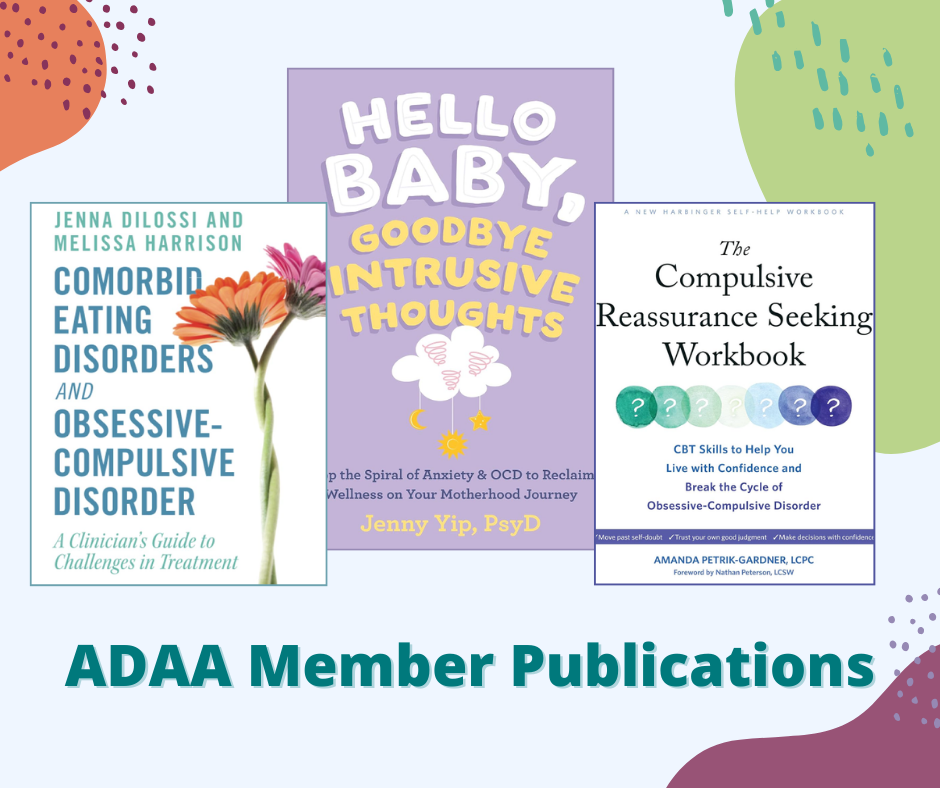
Books authored by: Jenna DiLossi, PsyD, ABPP, Melissa Harrison, MA, LPC, Amanda Petrik-Gardner, LCPC, and Jenny Yip, PsyD, ABPP
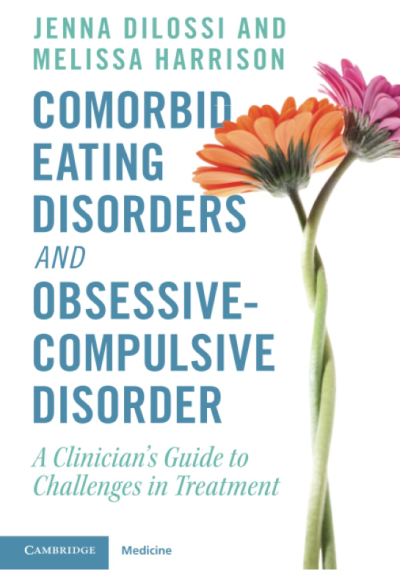
Until recently, a comprehensive book dedicated to the dual diagnoses and treatment challenges of persons with both an eating disorder and obsessive-compulsive disorder (OCD) did not exist. Much less a clinician’s guide with tools and advice for health professionals working with patients with both diagnoses.
ADAA member authors Jenna DiLossi, PsyD, ABPP and Melissa Harrison, MA, LPC have extensive clinical experience treating patients with both eating disorders and OCD, as well as presenting at several conferences. The authors say that while the diagnostic overlap is well documented in the literature, there is still a dearth in published clinical information for navigating this “tricky presentation”.
The authors hope to fill the gap with their new book Comorbid Eating Disorders and Obsessive-Compulsive Disorder: A Clinician's Guide to Challenges in Treatment. Numerous studies have shown that individuals with eating disorders have statistically higher rates of OCD and vice versa. Seeing these patients in their own outpatient practice, Dr. DiLossi and Harrison wanted to help other clinicians who might be working with similar clients and feeling challenged by the process.
“Our vision for the book is that it be used as a supplemental tool to provide evidence-informed guidance for clinicians in practice,” Dr. DiLossi told ADAA. “We hope to have some part in developing and empirically examining a systematic treatment protocol for this presentation down the road.”
The book, which includes case studies, clinical pitfalls, assessments, and suggested treatments, details the overlap between both illnesses and how comorbidity changes the overall presentations, but it is not all clinical and academic. The authors write candidly about the importance of the human psyche and being able to connect with their patients on an emotional level.
“It is crucial for clinicians to have an understanding of the theories that are the backbone to behavioral interventions for these patients,” said Harrison, “but also having a clear real-world picture of each patient’s core fears, possible individual outcomes, and their ability to cope and understand the relationship between the biological effects of being underweight and malnourished and increased obsessional thinking and compulsive behavior.”
The authors note that the book is intended for clinicians, but it is also suited for students, interns, and post docs who have not yet treated this population but have an interest in one or both diagnoses.
“We are incredibly grateful to the patients who have trusted us to manage their care over the years,” the authors told ADAA. “Each and every one of their journeys has been invaluable to our understanding of this diagnostic presentation and have played a vital role in this book’s development.”
Order Comorbid Eating Disorders and Obsessive-Compulsive Disorder: A Clinician's Guide to Challenges in Treatment here.
As humans, giving and getting reassurance is important and natural to us. It helps us connect, feel validated, understood, and can help us to feel less alone. It is generally healthy and helpful. But when seeking reassurance becomes an uncontrollable relentless issue, falling into a cycle of obsessive-compulsive behavior, it is neither healthy nor productive.
ADAA member Amanda Petrik-Gardner, LCPC has written a step-by-step workbook to help address a need she found in working with clients and their families where excessive reassurance seeking compulsions were impeding the clients’ daily functioning and putting stress on family and friends.
The clinician’s new book The Compulsive Reassurance Seeking Workbook: CBT Skills to Help You Live with Confidence and Break the Cycle of Obsessive-Compulsive Disorder offers tools to reduce compulsions, make peace with uncertainty, and better manage OCD. Grounded in cognitive behavioral therapy (CBT), the workbook shows how compulsive reassurance seeking can interfere with relationships, and provides healthy coping strategies, without resorting to compulsive questioning.
Petrik-Gardner says compulsive reassurance seeking is exhausting and the condition can be a “sneaky and complex compulsion” where clients may not recognize they are doing it, families may have difficulty seeing how constant reassurance is unhelpful, and both clients and families are at a loss at what to do to break the cycle.
“This sort of behavior, more often than not, exposes you and those closest to you to increased levels of conflict, stress, and anxiety,” said the ADAA member. “It’s time to reassure yourself in a way that encourages and empowers you to seek genuine well-being, self-worth, and peace of mind from within.”
The workbook, intended for individuals with OCD, though loved ones and professionals may also find it beneficial, provides evidence based treatment options, an easy-to-follow guide with exercises, and stories to keep the readers motivated on their journey.
“As an OCD specialist with lived experience - and I shared many of my OCD stories in the workbook,” Petrik-Gardner told ADAA, “I was able to provide information all readers could relate to.”
The author wants readers to get a sense of normalization and hope, and walk away with a multitude of tools they can use. Not all reassurance is bad, says Petrik-Gardner, especially if it is out of curiosity or to gather information, but recognizing when a compulsion is part of our OCD sequence is essential and knowing there are several treatment options is crucial.
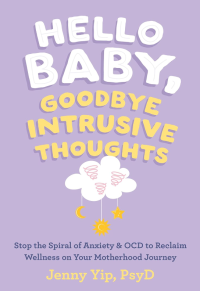
Hello Baby, Goodbye Intrusive Thoughts ...You would be hard pressed to find a mother who is or was not anxious at some point during her journey through motherhood. Whether an expectant mom, a new mother, or one with two or more children, motherhood is difficult, demanding, and stressful. It can lead to physical exhaustion, mental fatigue, emotional vulnerability, frustration, and even chronic burnout.
ADAA member Jenny Yip, PsyD, ABPP does not deny the joys of motherhood. But as a mom of twin boys, parenting and OCD expert, author, renowned speaker, and child psychologist, she knows the challenges and complexities that come with being everything to everyone and having to be everywhere all at once, giving and giving until it seems like there’s nothing left to give!
In Dr. Yip’s newest publication, she gives us a compassionate book geared to support mothers whose worries and anxieties have gone beyond normal levels and now interfere with their daily functioning. Hello Baby, Goodbye Intrusive Thoughts: Stop the Spiral of Anxiety and OCD to Reclaim Wellness on Your Motherhood Journey addresses motherhood at different stages of the process, focusing on anxiety and OCD, and the frightening and sometimes disturbing intrusive thoughts that can affect some moms.
With evidence-based cognitive behavioral (CBT) and exposure and response prevention (ERP) strategies, anecdotes, and case studies, the book outlines ways that mothers with intrusive thoughts can spend less time in their heads and more time connecting with their children. As someone who battled postpartum OCD herself, Dr. Yip offers both professional and personal insight.
“I describe my own postpartum OCD journey in the book,” Dr. Yip told ADAA, “and what I learned is that we have to be able to tolerate uncertainty. We have to be ok imagining the worst and not letting it paralyze us. We have to live authentically with our families, be available to them emotionally and embrace the fact that anything can happen.”
Hello Baby, Goodbye Intrusive Thoughts provides a toolbox for all mothers with practical step-by-step exercises, heartfelt stories from moms across the globe, and the latest scientific research to help mothers all over the world practice habits that will nurture the bond between mother and child and help them reclaim their wellness on their motherhood journey.
“It’s so important for mothers to take ownership and prioritize their own self-maintenance, and self-maintenance is not just self-care,” Dr. Yip says, giving the example of a vehicle that will break down if it doesn’t get taken in for maintenance.
Self-care is optional, she explains. Self-maintenance, such as focusing and using strategies – like those in her book - for dealing with intrusive thoughts and learning to let go of what she calls the “perfect household disease”, is not.
View ADAA's bookstore of our members' self-help books.
Read all of the ADAA Member Book Blogs here.


Take Action
Find Help. Learn More. Support ADAA.






ADAA Blog Content and Blog Comments Policy
ADAA provides this Website blogs for the benefit of its members and the public. The content, view and opinions published in Blogs written by our personnel or contributors – or from links or posts on the Website from other sources - belong solely to their respective authors and do not necessarily reflect the views of ADAA, its members, management or employees. Any comments or opinions expressed are those of their respective contributors only. Please remember that the open and real-time nature of the comments posted to these venues makes it is impossible for ADAA to confirm the validity of any content posted, and though we reserve the right to review and edit or delete any such comment, we do not guarantee that we will monitor or review it. As such, we are not responsible for any messages posted or the consequences of following any advice offered within such posts. If you find any posts in these posts/comments to be offensive, inaccurate or objectionable, please contact us via email at [email protected] and reference the relevant content. If we determine that removal of a post or posts is necessary, we will make reasonable efforts to do so in a timely manner.
ADAA expressly disclaims responsibility for and liabilities resulting from, any information or communications from and between users of ADAA’s blog post commenting features. Users acknowledge and agree that they may be individually liable for anything they communicate using ADAA’s blogs, including but not limited to defamatory, discriminatory, false or unauthorized information. Users are cautioned that they are responsible for complying with the requirements of applicable copyright and trademark laws and regulations. By submitting a response, comment or content, you agree that such submission is non-confidential for all purposes. Any submission to this Website will be deemed and remain the property of ADAA.
The ADAA blogs are forums for individuals to share their opinions, experiences and thoughts related to mental illness. ADAA wants to ensure the integrity of this service and therefore, use of this service is limited to participants who agree to adhere to the following guidelines:
1. Refrain from transmitting any message, information, data, or text that is unlawful, threatening, abusive, harassing, defamatory, vulgar, obscene, that may be invasive of another 's privacy, hateful, or bashing communications - especially those aimed at gender, race, color, sexual orientation, national origin, religious views or disability.
Please note that there is a review process whereby all comments posted to blog posts and webinars are reviewed by ADAA staff to determine appropriateness before comments are posted. ADAA reserves the right to remove or edit a post containing offensive material as defined by ADAA.
ADAA reserves the right to remove or edit posts that contain explicit, obscene, offensive, or vulgar language. Similarly, posts that contain any graphic files will be removed immediately upon notice.
2. Refrain from posting or transmitting any unsolicited, promotional materials, "junk mail," "spam," "chain mail," "pyramid schemes" or any other form of solicitation. ADAA reserves the right to delete these posts immediately upon notice.
3. ADAA invites and encourages a healthy exchange of opinions. If you disagree with a participant 's post or opinion and wish to challenge it, do so with respect. The real objective of the ADAA blog post commenting function is to promote discussion and understanding, not to convince others that your opinion is "right." Name calling, insults, and personal attacks are not appropriate and will not be tolerated. ADAA will remove these posts immediately upon notice.
4. ADAA promotes privacy and encourages participants to keep personal information such as address and telephone number from being posted. Similarly, do not ask for personal information from other participants. Any comments that ask for telephone, address, e-mail, surveys and research studies will not be approved for posting.
5. Participants should be aware that the opinions, beliefs and statements on blog posts do not necessarily represent the opinions and beliefs of ADAA. Participants also agree that ADAA is not to be held liable for any loss or injury caused, in whole or in part, by sponsorship of blog post commenting. Participants also agree that ADAA reserves the right to report any suspicions of harm to self or others as evidenced by participant posts.